


Is Your Concrete Patio in Palm Beach County Starting to Shift or Settle?
Most homeowners think a patio is just concrete. Pour it, finish it, forget it. But the ground beneath that slab has other plans — and if you're not watching, you're in for uneven surfaces, cracked edges, and trips to urgent care. Concrete doesn't settle on its own. Something underneath is giving way. And the longer you wait to address it, the worse the damage gets.
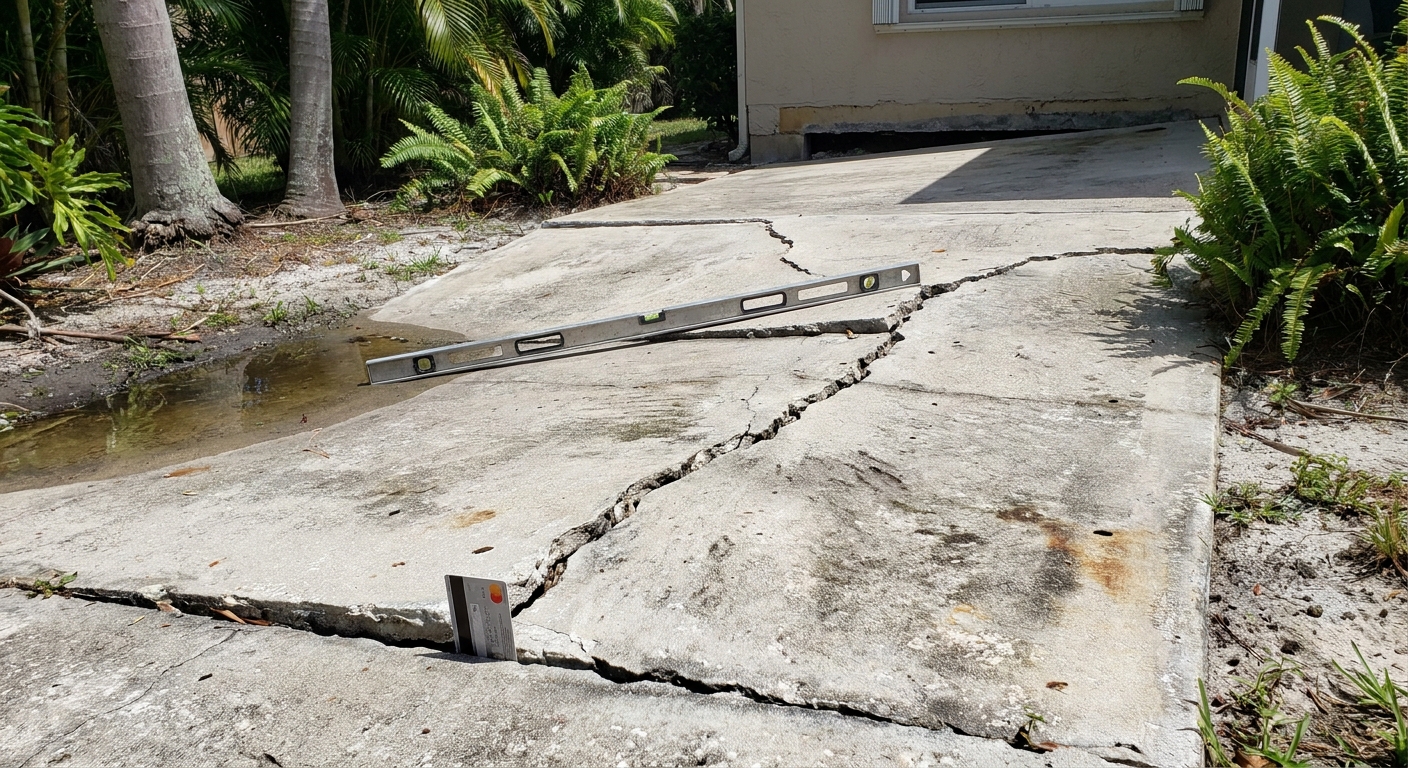
Here's what matters. If you're seeing gaps, slopes, or cracks wider than a credit card, that's not cosmetic. That's structural. Every shift tells a story about what's happening below grade. Every crack is a warning. And every repair decision should be based on the cause — not just what you see on the surface.
When the Ground Gives Out
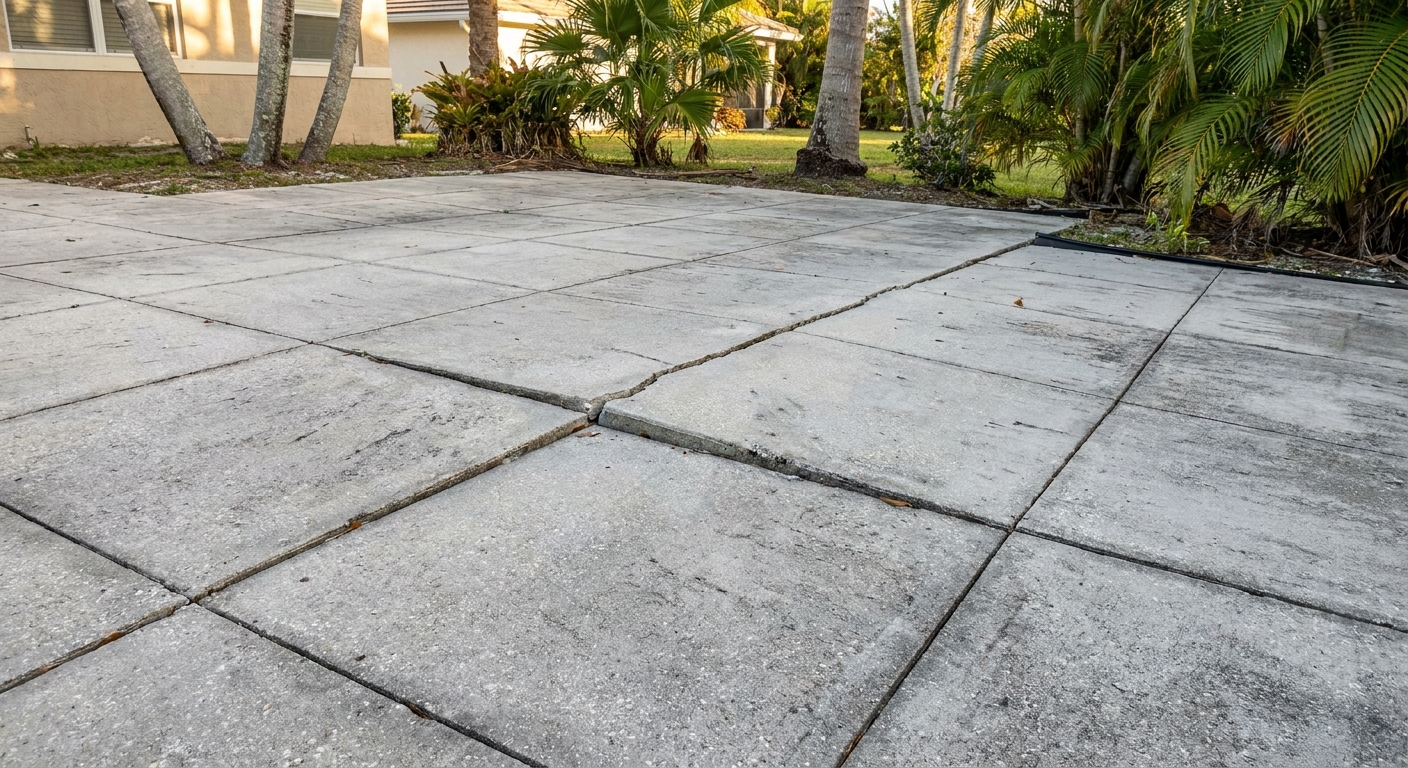
Nine times out of ten, patio problems start with the soil. You pour a slab, it looks perfect, then six months later one corner drops two inches. That's not bad luck — that's South Florida soil doing what it does when water, roots, or poor prep get involved.
Palm Beach County sits on sandy, porous ground that erodes fast when drainage goes sideways. Add heavy summer rains, and you've got voids forming under slabs. We've seen it happen with new construction and decades-old patios alike. If the base wasn't compacted right or the grading slopes the wrong way, settlement isn't a question of if — it's when. Issues like these are among the concrete repair problems many Loxahatchee homeowners experience throughout the region.
The Red Flags You Shouldn't Ignore
You don't need an engineer to spot trouble. Walk your patio with a level and your eyes open. Most shifts announce themselves long before they become hazards — you just have to be paying attention.
Here's what we look for when inspecting a slab that's starting to move:
- Cracks running through the middle or along edges
- Sections that rock when you step on them
- Visible gaps between the patio and your home's foundation
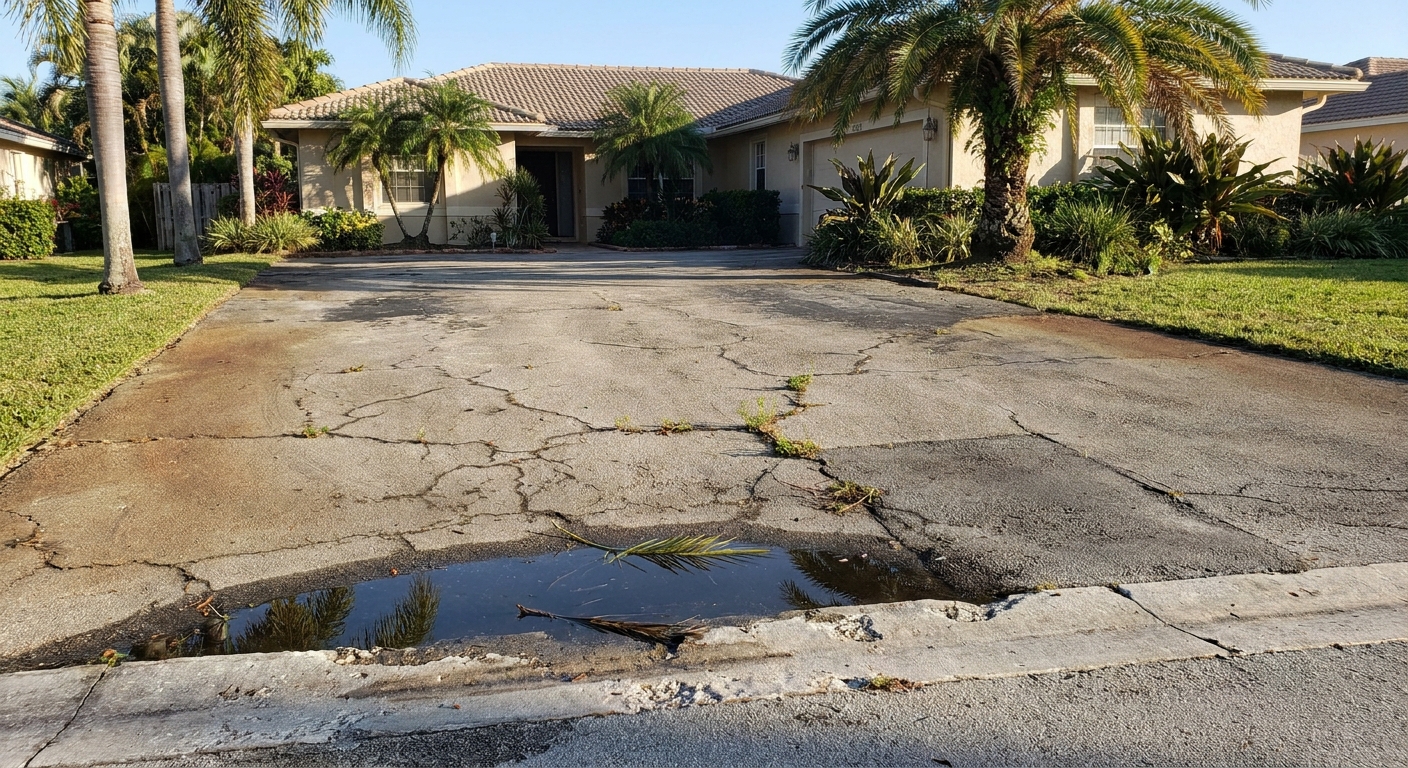
- Water pooling in areas that used to drain fine
- Patio furniture that wobbles on surfaces that were once flat
- Doors or sliding glass panels that scrape or stick due to foundation movement
What's Really Happening Below the Surface
Concrete doesn't settle for no reason. Something underneath is changing — and it's usually one of a handful of usual suspects. Understanding the cause helps you fix it right the first time instead of throwing money at temporary patches.
Here's what drives most patio movement in this region:
- Soil washout: Heavy rain erodes the sand base, leaving hollow pockets that can't support the weight above
- Weak compaction: If the contractor rushed the base prep, the soil compresses over time and the slab follows
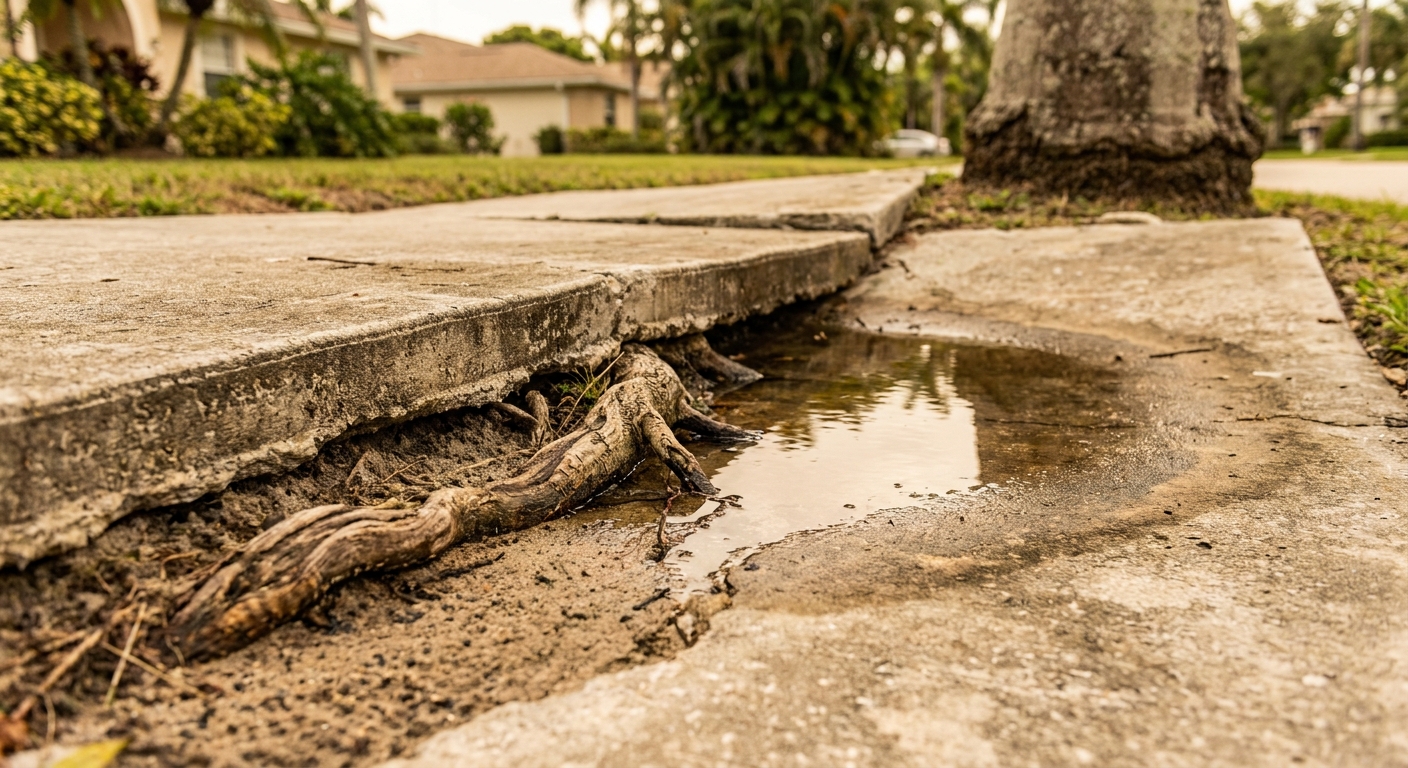
- Root intrusion: Trees and palms send roots under slabs, lifting sections or cracking them as they expand
- Drainage failures: Water that doesn't flow away from the patio saturates the base and destabilizes everything
- Age and weathering: UV, heat cycles, and salt air all break down concrete — especially if it wasn't sealed or reinforced properly
Why Waiting Makes It Worse
Ignoring a shifting patio isn't just about aesthetics. Uneven concrete becomes a liability. Someone trips, someone gets hurt, and suddenly you're dealing with medical bills or a lawsuit. These are the kind of trip hazards commonly found in Palm Beach County walkways and outdoor spaces. Cracks let water migrate toward your foundation, which can undermine your home's structure. And every season you delay, the repair gets more expensive.
We've seen homeowners wait two years thinking a crack would stabilize. It didn't. It widened, the slab dropped another inch, and what could've been a $2,000 fix turned into a $10,000 replacement. Concrete doesn't heal itself. Movement accelerates once it starts.
How Professionals Fix Settlement
If your patio has already shifted, you've got options. The right one depends on how bad the damage is and what caused it. A qualified contractor will assess the underlying issue before recommending a fix — because patching the surface without addressing the base is just wasting money.
Common repair methods include:
- Mudjacking: Pumping a cement slurry under the slab to lift it back into place
- Polyurethane foam injection: A lighter, faster alternative that fills voids and raises concrete with expanding foam
- Slab replacement: Sometimes the damage is too far gone, and tearing out the old patio is the only real solution
- Root removal and barriers: Cutting invasive roots and installing barriers to prevent future lifting
- Drainage correction: Regrading around the patio or installing French drains to redirect water flow
Stop the Problem Before It Starts
Prevention is cheaper than repair. Always. If you're pouring a new patio or replacing a failed one, make sure the contractor knows what they're doing. That means proper soil compaction, reinforced concrete, and a drainage plan that accounts for Florida's wet season. Understanding how weather affects concrete curing in Palm Beach County can help you avoid future problems.
We recommend working with contractors who've handled patios in coastal and high-water-table areas. They understand soil behavior here. They know how to grade for runoff. And they don't skip steps just to close the job faster. For expert guidance on looking after your concrete patio in Loxahatchee, consult professionals who specialize in the region's unique challenges.
What to Do Right Now
If you're seeing signs of movement, don't wait for it to get worse. Start with a walk-around inspection. Document cracks, measure gaps, and check how water drains after a storm. If the problem is minor — a hairline crack or slight unevenness — you might get away with sealing and monitoring. But if you're seeing significant slope, wide cracks, or standing water, call in a pro.
Most concrete specialists offer free assessments. They'll tell you what's causing the shift and what it'll take to fix it. Some issues can be handled in a day. Others require excavation, new base material, or even foundation work. Either way, you'll know what you're dealing with — and what it'll cost — before making a decision. For comprehensive solutions, explore our patios services to see how we can restore your outdoor space.
Keep Your Outdoor Space Functional
A patio that's shifting or settling isn't just an eyesore. It's a safety risk, a drainage problem, and a potential threat to your home's foundation. But it's also fixable — if you act before the damage spreads. Whether you need a lift, a patch, or a full replacement, the key is understanding what's happening below the surface and addressing the root cause. If you're interested in refreshing your outdoor space with new ideas, check out concrete patio designs Palm Beach County homeowners love for inspiration. Do that, and your patio will serve you well for years without becoming a recurring headache.
Let’s Restore Your Patio the Right Way
We know how frustrating it is to watch your patio shift and crack, but you don’t have to tackle it alone. Let’s work together to bring your outdoor space back to life with solutions that last. Give us a call at 561-436-5977 to talk through your concerns, or Request A Quote and see how we can help you enjoy a safer, more beautiful patio for years to come.
‹ Back
Recent Posts
-
How Much Does a New Concrete Driveway in Palm Beach County Cost?
September 15, 2026
-
Can Concrete Grinding Make Walkways in Palm Beach County Safer?
September 1, 2026
-

-
-
Why Does Concrete in Palm Beach County Become Uneven?
July 21, 2026