


Is Your Palm Beach County Driveway Showing Signs of Surface Wear?
Most Palm Beach County homeowners assume driveway damage shows up overnight. It doesn't. Wear builds slowly—cracks widen, color fades, water pools where it shouldn't. By the time you're staring at a pothole or watching weeds sprout from gaps in the pavement, the problem's been brewing for months. Maybe longer.
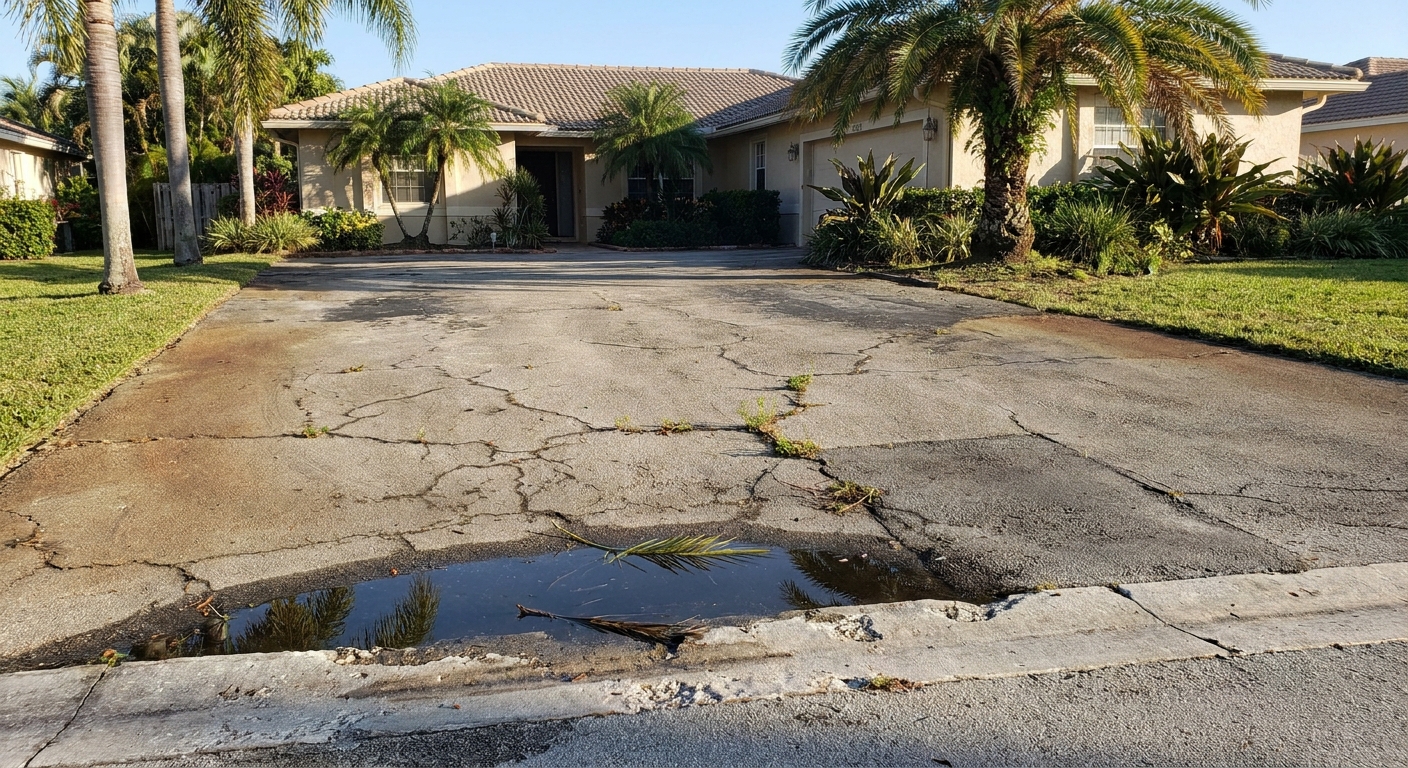
The Florida elements don't play fair. UV rays beat down on asphalt and concrete every single day, breaking down protective layers and turning solid surfaces brittle. Heavy rains wash into hairline fractures, eroding what's underneath. Salt air drifts inland and accelerates the breakdown. And every car that rolls over a weakened spot? That's another nudge toward serious damage. If your driveway's been showing signs, ignoring them won't make them disappear.
What Wear Actually Looks Like
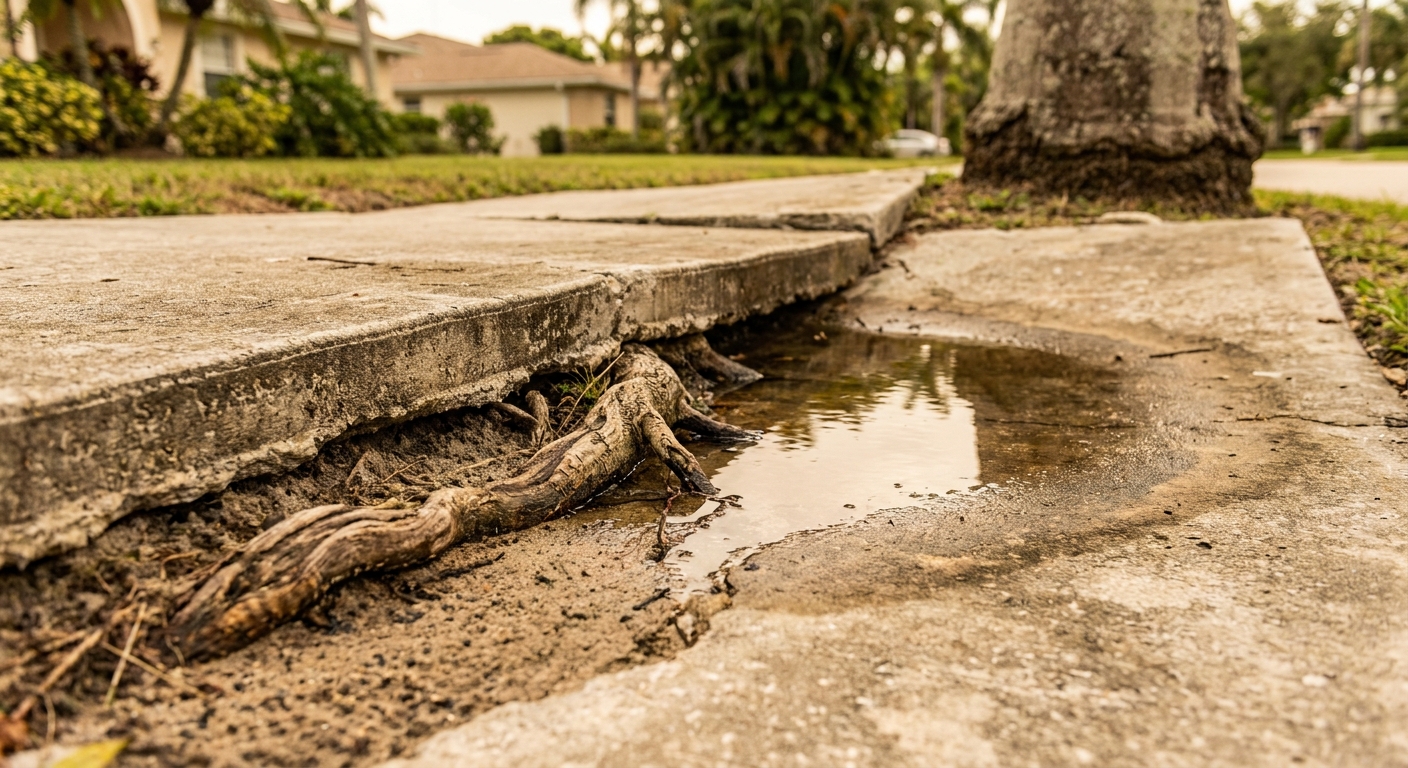
Surface damage doesn't always announce itself with a massive crater. Sometimes it's subtle—a little too subtle if you're not paying attention. But once you know what to look for, the clues are everywhere. Cracks that started thin can branch out like spiderwebs. Faded patches that once matched the rest of the surface now stand out like stains. Uneven sections that trap water after every storm.
The real problem isn't just aesthetics. It's what those visible signs are telling you about what's happening underneath. Once water gets into cracks, it doesn't just sit there—it erodes the base material, creates voids, and destabilizes the whole structure. That's when small repairs turn into major overhauls.
- Thin cracks spreading wider with each passing month
- Color loss that leaves your driveway looking weathered and neglected
- Potholes forming where water infiltrated and washed out the foundation
- Rough texture as the top layer erodes and exposes aggregate underneath
- Weeds pushing through gaps that have grown large enough to host roots and seeds
Why Palm Beach County Driveways Take a Beating
We're not dealing with mild weather here. This climate punishes outdoor surfaces year-round. The sun alone does enough damage to shorten the lifespan of any driveway that isn't properly maintained. Add in the humidity, the tropical downpours, and the salt content in the air near the coast, and you've got a recipe for accelerated wear.
UV radiation breaks down the binding agents in both asphalt and concrete, making them brittle and prone to cracking. Rain doesn't just wash over the surface—it seeps into every tiny opening, carrying moisture deep into the layers below. When that moisture sits, it erodes. When it evaporates, it leaves behind voids. And when salt particles settle into those voids? Corrosion speeds up even faster. Understanding how weather affects concrete curing in Palm Beach County helps explain why proper installation matters so much from day one.
The Timeline for Taking Action
Not every crack means you need to rip out the entire driveway tomorrow. But waiting too long turns minor fixes into expensive reconstruction projects. The key is knowing when the damage has crossed the line from "cosmetic nuisance" to "structural problem."
If cracks are still thin and shallow, filling and sealing them can buy you years. If they're wide enough to fit a coin inside, you're looking at water intrusion and erosion risk. Potholes mean the base has already been compromised. Persistent pooling water means your drainage is failing—and that's a sign the foundation might be settling unevenly.
- Cracks exceeding a quarter-inch need immediate sealing to block water
- Multiple potholes signal deeper structural failure beneath the surface
- Heavy fading or exposed aggregate means the protective layer is gone
- Standing water that won't drain points to grading or foundation issues
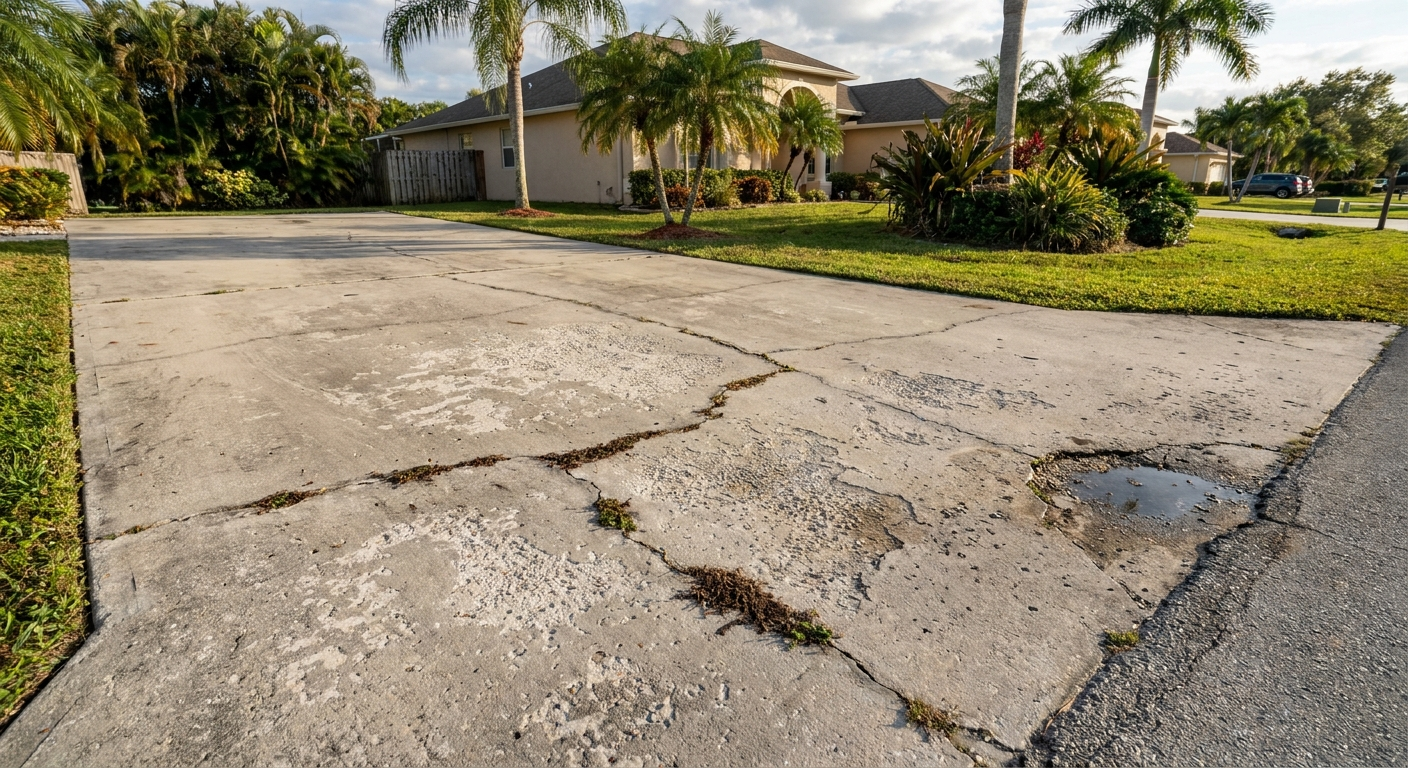
Keeping Your Driveway from Falling Apart
Maintenance isn't glamorous, but it works. Sealing your driveway every couple of years gives it a fighting chance against the elements. Cleaning up oil spills before they soak in prevents chemical breakdown. Pulling weeds before they turn cracks into canyons stops minor damage from escalating.
Most of this doesn't require professional help—just consistency. Walk your driveway a few times a year and actually look at it. Spot the trouble early, and you'll save yourself the headache of dealing with it late. Learning how to protect your concrete driveway from Florida's sun can extend its life and preserve its appearance for years.
- Apply sealant every two to three years to shield against UV and moisture
- Wipe up automotive fluids immediately to avoid surface degradation
- Clear debris and vegetation from cracks as soon as you notice them
- Inspect for new damage after heavy storms or extreme heat spells
When DIY Isn't Enough
Some repairs are beyond what a tube of crack filler and a weekend can handle. Deep cracks, widespread potholes, major surface erosion—these need professional assessment and equipment. A local contractor who knows Palm Beach County's climate can tell you whether patching will hold or if resurfacing is the smarter move.
Trying to stretch a temporary fix into a permanent solution usually just delays the inevitable. And the longer you wait, the more expensive the real repair becomes. Get it looked at before the damage spreads. Professional driveway services can address structural issues that go beyond surface-level patching.
- Extensive cracking across large sections of the driveway
- Potholes that reappear even after patching attempts
- Severe surface erosion that exposes the base layer
- Drainage problems causing repeated flooding or standing water
Protecting What You've Already Paid For
Your driveway isn't just a slab of pavement—it's part of your property's value and curb appeal. Letting it deteriorate doesn't just look bad; it costs more to fix later and can even affect resale value. Regular attention keeps it functional, safe, and presentable without requiring a full replacement every decade. Concrete grinding can restore uneven surfaces and eliminate minor trip hazards before they become major problems.
Surface wear happens. It's inevitable with Florida's weather. But how much damage you let accumulate before you act? That's entirely up to you. Address the small stuff now, and you won't be dealing with the big stuff later. Explore keeping concrete looking good year-round in Florida's climate for more maintenance strategies that work in this challenging environment.
Let’s Restore Your Driveway’s Best Days
We know how quickly Florida’s weather can turn a solid driveway into a source of stress. Let’s work together to protect your investment and keep your home looking its best. If you’re seeing signs of wear or just want peace of mind, give us a call at 561-436-5977. Ready to get started? request a quote and let’s bring your driveway back to life.
‹ Back
Recent Posts
-
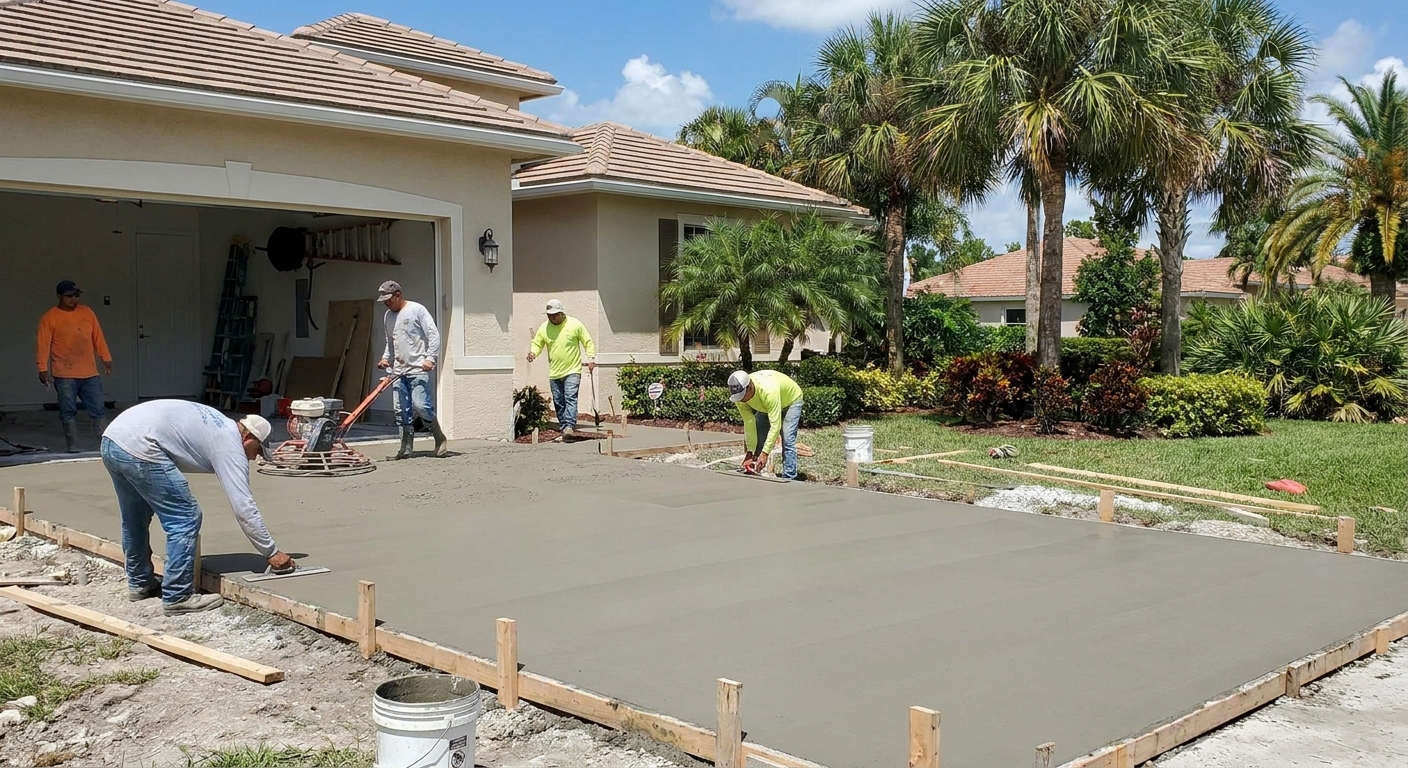
How Much Does a New Concrete Driveway in Palm Beach County Cost?
September 15, 2026
-
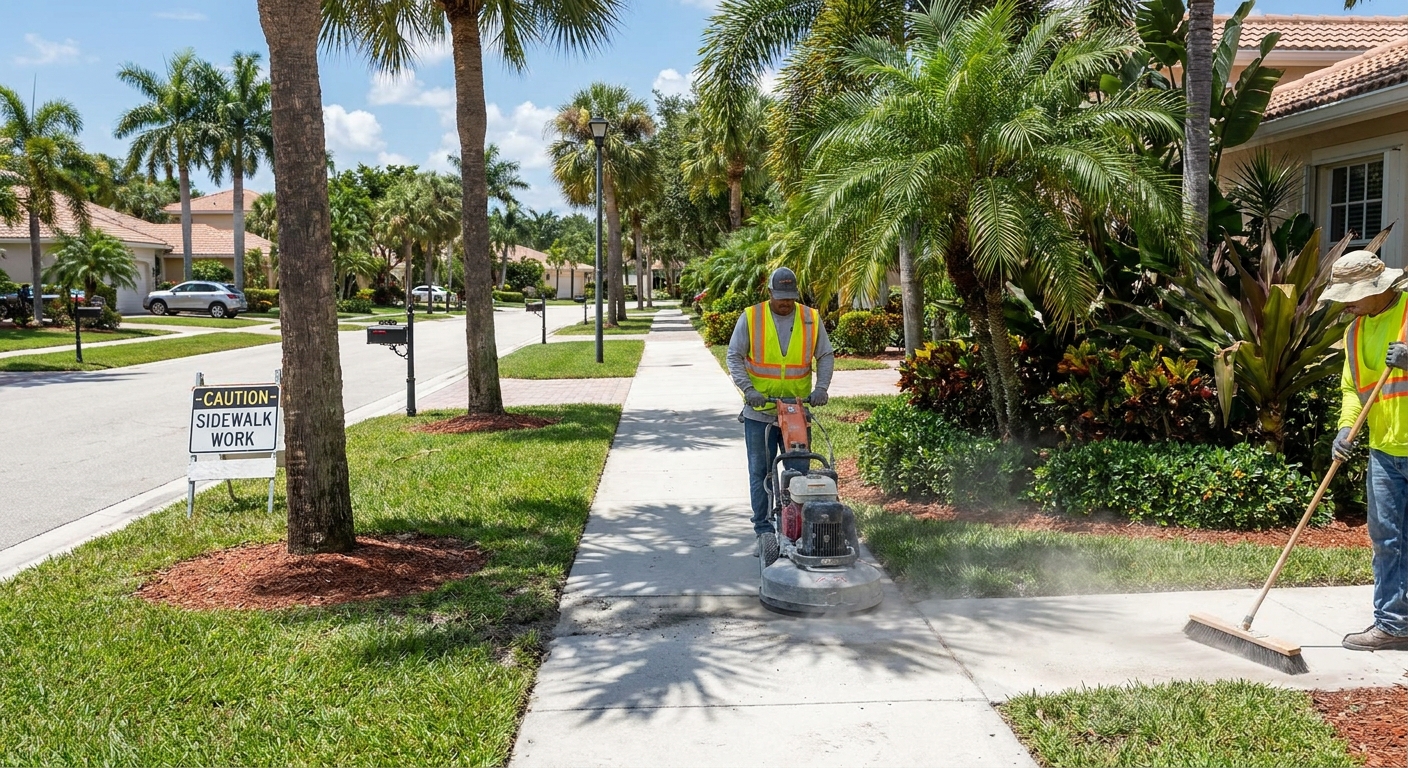
Can Concrete Grinding Make Walkways in Palm Beach County Safer?
September 1, 2026
-

-
-
Why Does Concrete in Palm Beach County Become Uneven?
July 21, 2026