


Why Does Concrete in Palm Beach County Become Uneven?
Palm Beach County property owners watch their slabs crack, sink, and tilt — and most don't realize the damage started years before the surface ever showed it. The ground beneath is moving. Water's doing its thing. Roots are creeping. And the concrete? It's just trying to keep up with forces it was never designed to handle.
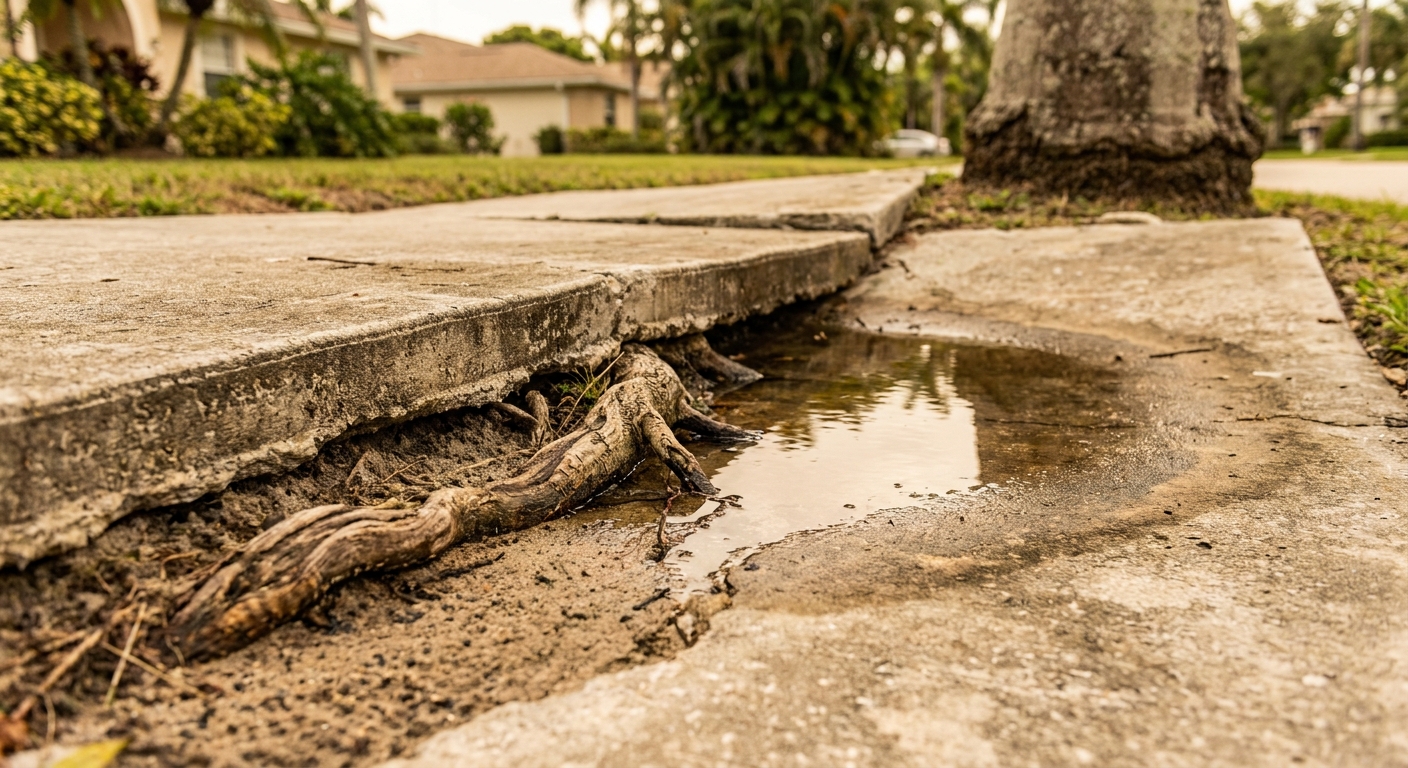
You can't stop the climate. You can't rewrite the soil profile. But you can understand what's happening underneath — and more importantly, what that means for the surfaces holding up your property. Every shift starts small. Every crack has a cause. And every decision about repair or replacement should be based on what's actually breaking down below, not just what looks off from the driveway.
Sandy Soil Does What Sandy Soil Does
The foundation of half the county is sand. Not the kind you'd build castles with, but the kind that compresses, shifts, and washes away when water moves through it. Concrete poured over sandy soil doesn't sit on a solid base — it sits on something that behaves more like a sponge. When weight presses down, when rain seeps in, when the water table drops or rises, that sand rearranges itself.
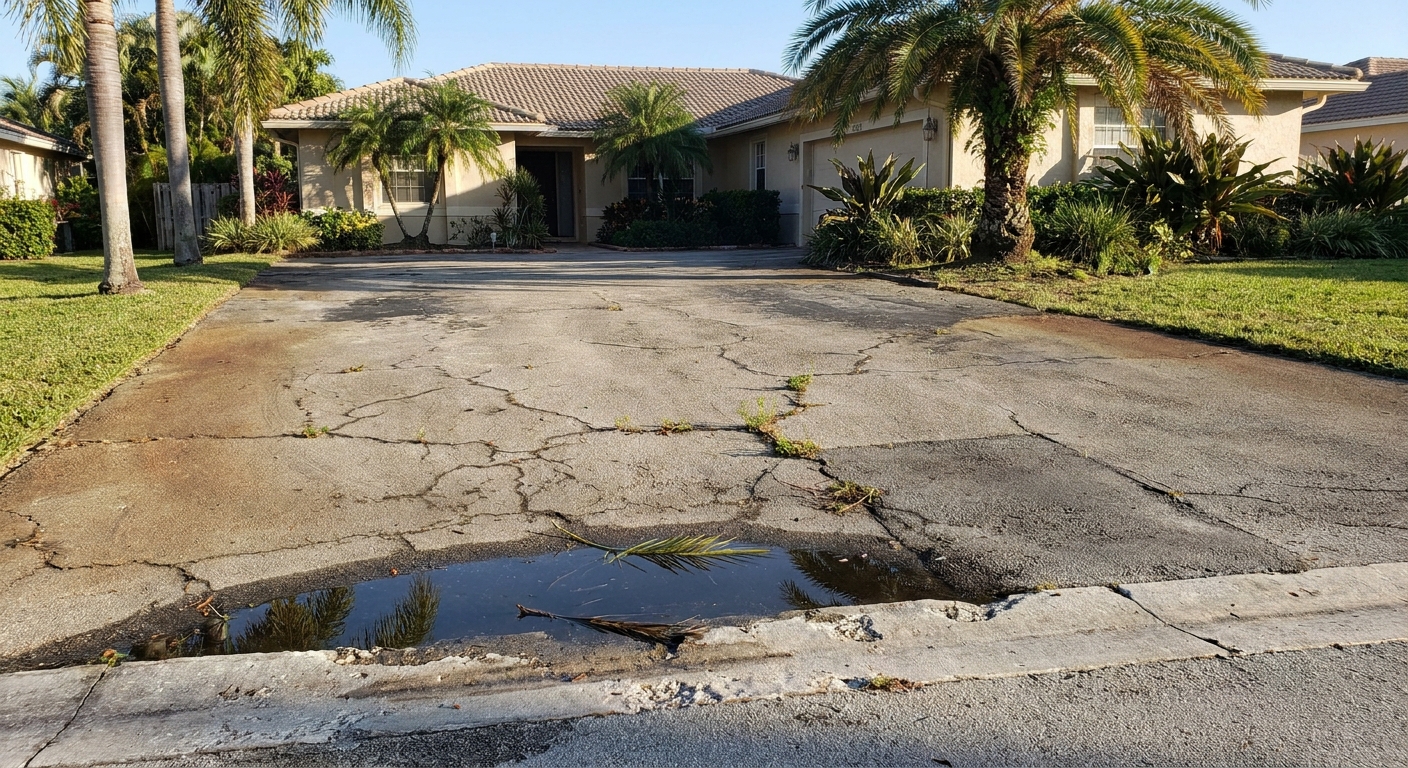
And it's not just sand. Some areas have pockets of organic material mixed into the subsoil. As that material decomposes, it shrinks. The ground settles. The slab above loses support, and suddenly you've got a low spot or a crack running straight through the middle of your concrete driveway. It's not poor craftsmanship — it's geology.
Water Finds Every Weakness
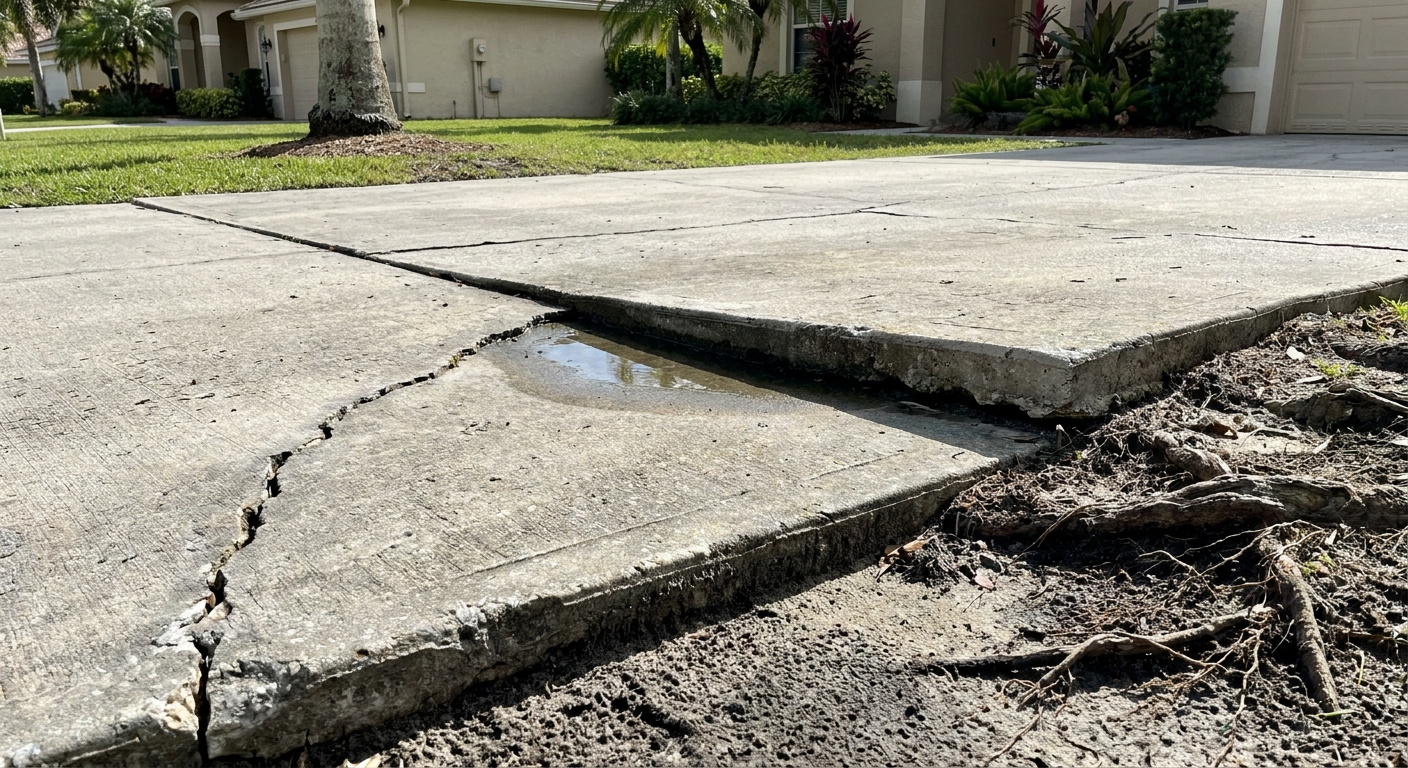
This county gets hit with downpours that most climates don't see in a season. When that water doesn't drain properly, it pools around slabs, seeps underneath, and erodes the soil that's supposed to be holding everything up. You end up with voids beneath the concrete. Once the support's gone, the slab sinks.
Bad grading makes it worse. So do clogged gutters, overactive irrigation systems, and leaking plumbing. If water's being directed toward your concrete instead of away from it, you're stacking the deck against yourself. The damage doesn't happen overnight, but it's happening — and by the time you notice the tilt, the erosion's already deep.
Roots Don't Ask Permission
Trees are great until they're not. Their roots spread out looking for water and nutrients, and they don't care if your concrete's in the way. As roots grow, they push upward. Slabs lift. Cracks form. In some cases, the root mass gets so dense that it destabilizes the soil entirely, creating hollow pockets that leave the concrete with nothing to rest on.
But roots also pull moisture out of the ground, especially during dry spells. That causes the soil to shrink and settle. So you've got pressure from below and instability from shrinkage — a one-two punch that leaves concrete surfaces buckled, cracked, or sloped in ways that weren't there when the slab was poured.
Not All Concrete Work Is Built to Last
Sometimes the unevenness has nothing to do with the environment and everything to do with how the concrete was installed. If the base wasn't compacted properly, if the thickness was cut short to save money, if the mix wasn't right for the local conditions — the slab's already compromised before the first crack shows.
In a place like Palm Beach County, where soil and water conditions are tough, shortcuts catch up fast. We've seen slabs poured over loose fill, slabs with no reinforcement, and slabs installed without proper grading or drainage planning. Those don't settle evenly. They fail in sections, and once one part goes, the rest follows.
- Inadequate soil compaction before the pour
- Incorrect concrete mix for the local climate
- Lack of reinforcement or control joints
- Poor site grading that directs water toward the slab
- Cutting corners on thickness or curing time
Heat and Moisture Play Their Part Too
Concrete expands when it's hot and contracts when it cools. In a subtropical climate, that cycle repeats constantly. Over time, the repeated movement stresses the slab. If expansion joints weren't installed — or if they were placed incorrectly — cracks form. And once cracks appear, water gets in. That accelerates everything else: erosion, soil movement, and further cracking.
High humidity also affects how concrete cures and ages. Moisture trapped in the slab can weaken it from the inside out. Combined with temperature swings and the other environmental stressors we've already covered, it's no wonder slabs start to fail after a few years of exposure. Understanding how weather affects concrete curing can help property owners make better decisions during installation.
What You Can Actually Do About It
Prevention starts with the pour. Proper compaction, smart drainage, the right mix, and thoughtful placement of joints and reinforcement can buy you years of stability. For existing slabs, regular maintenance matters. Seal cracks early. Redirect water. Manage tree placement and root growth. Don't wait until the slab's visibly sinking to take action.
When repair is necessary, mudjacking and foam injection are common solutions. Both methods lift the slab by filling voids underneath. Foam's lighter and more precise, but mudjacking works too if the conditions are right. In cases where the damage is too far gone, replacement might be the only real fix. A local contractor who understands the soil, water, and weather conditions here can walk you through what makes sense for your property.
- Seal cracks as soon as they appear
- Improve drainage around concrete surfaces
- Trim or relocate trees that threaten slab stability
- Consider mudjacking or foam injection for moderate settling
- Plan for full replacement if the slab's structurally compromised
Where Most Property Owners Miss the Mark
Waiting too long is the most common mistake. A small crack or slight tilt seems harmless until it's not. By the time you notice the problem, the erosion or root damage underneath is usually extensive. Acting early — even if it's just sealing a crack or redirecting a downspout — can prevent a minor issue from becoming a major expense.
Another misstep is assuming all contractors understand local conditions. Not every crew knows how to prep for sandy soil, manage drainage in a high-rain climate, or account for aggressive root systems. Hire someone with a track record in Palm Beach County, not just someone with a concrete mixer and a business card. Many homeowners face concrete repair problems that could have been avoided with proper installation and maintenance.
- Ignoring early warning signs like hairline cracks or pooling water
- Skipping routine maintenance and drainage checks
- Hiring contractors unfamiliar with local soil and climate challenges
- Trying DIY fixes for structural settling or significant erosion
- Failing to address root systems near concrete installations
Common Questions About Uneven Concrete
Can I just live with uneven concrete? Depends on how bad it is. Minor unevenness might be cosmetic. But if it's causing tripping hazards, drainage problems, or structural stress on adjacent areas, it's worth addressing. Liability and safety matter, especially if you're running a business or renting out property. Many property owners discover they need trip hazard repairs to maintain safe walkways and avoid liability issues.
How much does leveling cost? Mudjacking typically runs cheaper than foam injection, but foam lasts longer and works better in tighter spaces. Costs vary based on the size of the area, the severity of settling, and access. Replacement is the most expensive option but sometimes the only one that makes sense long-term.
Will it happen again after repair? If you don't fix the underlying cause — poor drainage, root pressure, soil instability — yes, it'll settle again. Repair buys you time, but it's not a cure if the environment or installation issues are still in play.
- Address drainage and root issues before lifting or replacing slabs
- Get multiple quotes from contractors experienced in local conditions
- Ask about warranties and what they actually cover
- Understand the difference between cosmetic fixes and structural repairs
- Don't assume one repair solves every problem — some slabs need phased work
When to Bring In a Professional
If you're dealing with significant settling, visible voids, or widespread cracking, this isn't a weekend project. A qualified contractor can assess the soil, check for erosion, measure the degree of settling, and recommend a solution that actually addresses the root cause. They'll also know whether your slab is worth saving or if replacement is the smarter move.
Good contractors don't just patch the surface. They look at grading, drainage, soil conditions, and what's causing the movement in the first place. That's the difference between a fix that lasts and one that buys you six months before the problem comes back. Professional concrete grinding can level uneven surfaces and eliminate minor height differences that contribute to drainage problems and trip hazards.
- Evaluate soil stability and drainage before recommending a solution
- Provide clear options for repair versus replacement
- Explain what caused the problem and how to prevent recurrence
- Offer warranties that reflect the quality of the work
- Work with engineers or specialists if the settling is severe or ongoing
Concrete That Stays Put Takes Planning
Uneven slabs aren't just an eyesore. They're a liability, a maintenance headache, and often a sign that something deeper is going wrong. Whether it's soil composition, water flow, aggressive roots, or sloppy installation, the causes are real and they're fixable — if you catch them early and handle them right. Property owners who prioritize keeping concrete looking good year-round understand that regular inspections and maintenance prevent costly repairs down the line.
At the end of the day, concrete in Palm Beach County is fighting an uphill battle. But with the right prep, the right crew, and a little attention to what's happening below the surface, you can keep your slabs level, safe, and solid for years. Don't wait for the cracks to spread. Fix the foundation, manage the water, and give your concrete a fighting chance.
Let’s Keep Your Concrete on Solid Ground
We know how frustrating it is to watch your concrete shift and crack in Palm Beach County’s tough conditions. If you’re ready to put an end to uneven slabs and want advice from a team that understands local soil, water, and weather, let’s talk. Call us at 561-436-5977 or request a quote and we’ll help you get your concrete back where it belongs—level, safe, and built to last.
‹ Back
Recent Posts
-
How Much Does a New Concrete Driveway in Palm Beach County Cost?
September 15, 2026
-
Can Concrete Grinding Make Walkways in Palm Beach County Safer?
September 1, 2026
-
-
-
Why Does Concrete in Palm Beach County Become Uneven?
July 21, 2026