


Signs Small Driveway Cracks in Palm Beach County Are Getting Worse
Most homeowners look at a hairline crack and think it's cosmetic. Just surface wear. Nothing to worry about. But in Palm Beach County, that's wishful thinking. The sun, the rain, the humidity—they don't care about your timeline. They're working against you every day. And if you're not paying attention, that crack you dismissed last month could be swallowing water, splitting wider, and setting you up for a bill you didn't budget for.
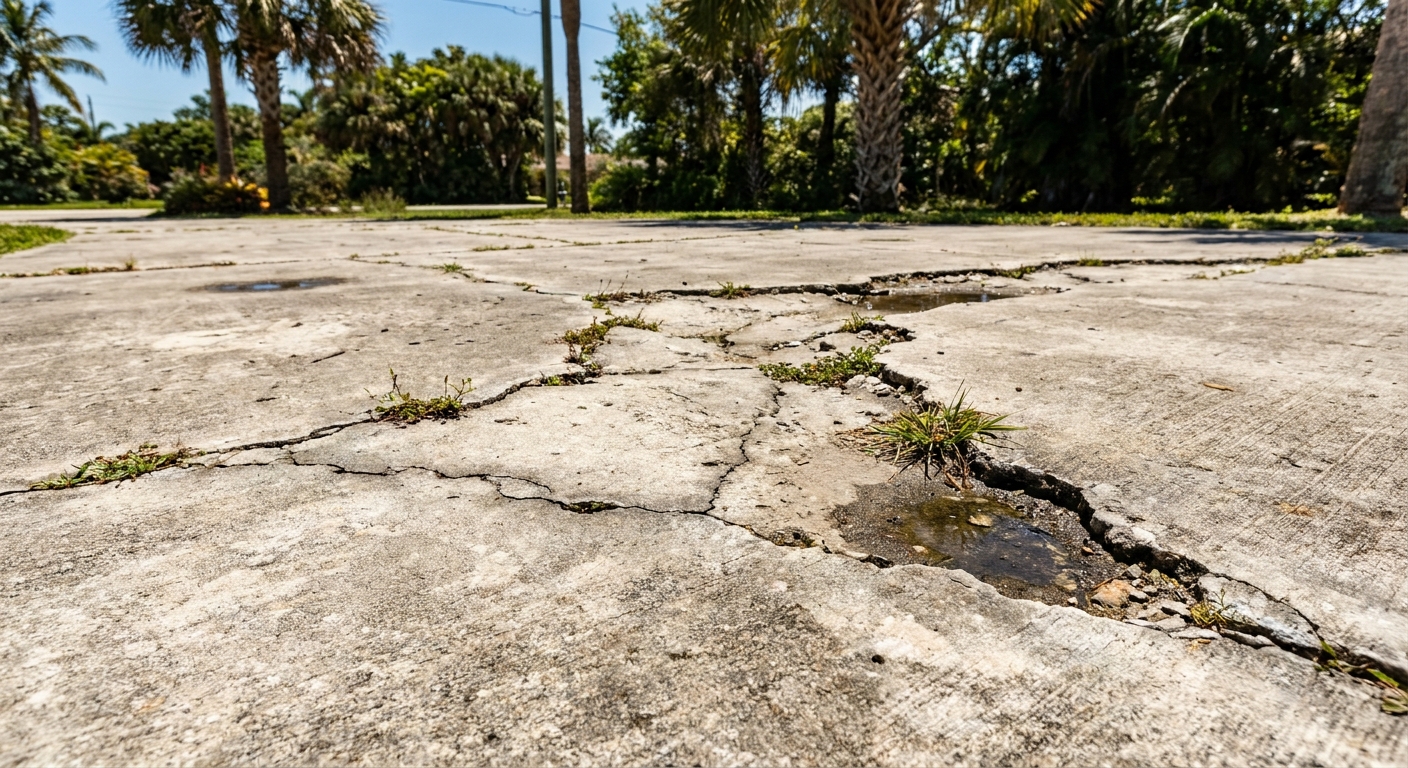
We've seen it play out over and over. A small fracture becomes a channel. A channel becomes a break. A break becomes a section that needs full replacement. The signs are there—you just need to know what you're looking for. And once you spot them, you need to move. Because in this climate, waiting is the same as choosing the expensive option.
The Width Starts Telling a Different Story
When a crack goes from barely visible to something you can slide a quarter into, that's not aging—it's active deterioration. The concrete or asphalt is losing its grip. What started as a surface fracture is now reaching deeper, and the material on either side is pulling apart. This happens faster in Florida than almost anywhere else. Heat causes expansion. Rain causes contraction. Every cycle widens the gap.
And once it's wide enough to hold moisture, the damage accelerates. Water doesn't just sit there—it migrates. It finds the base layer. It softens the foundation. By the time you notice the crack is twice as wide, the real damage is already happening underneath. Don't wait until you can see it from the curb.
Multiple Fractures Mean the Pressure Is Spreading
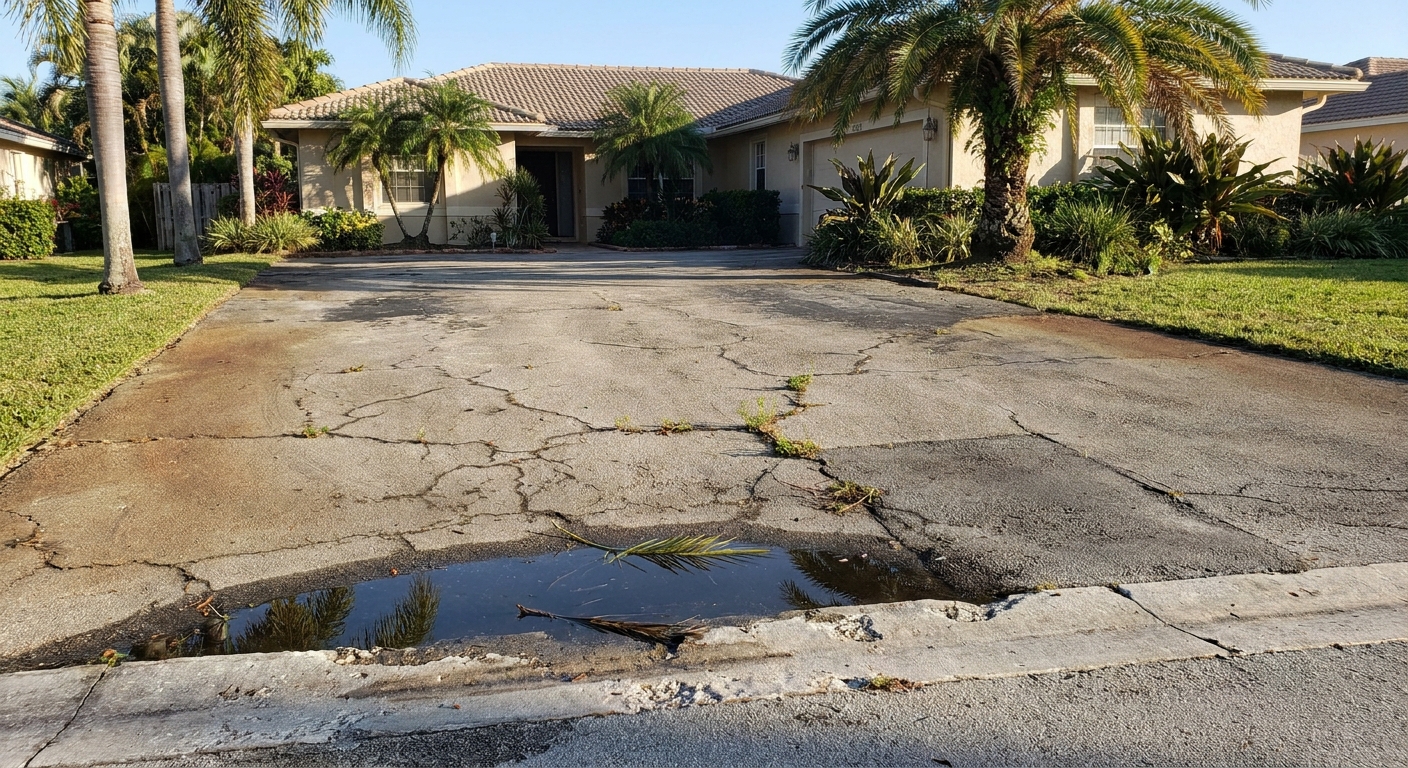
One crack might be a fluke. Three or four? That's a pattern. When new fractures start branching off or appearing near the original, it means the driveway is under stress. Maybe the soil shifted. Maybe drainage is funneling water where it shouldn't go. Maybe heavy vehicles are compressing the surface unevenly. Whatever the cause, the result is the same—your driveway is failing in stages.
These secondary cracks are a warning. They tell you the problem isn't isolated. It's systemic. And if you patch one without addressing the root cause, you'll be back out there next season doing it again. We've watched homeowners play whack-a-mole with cracks for years before finally calling in someone who knows what they're doing.
Edges Crumble and Material Breaks Away
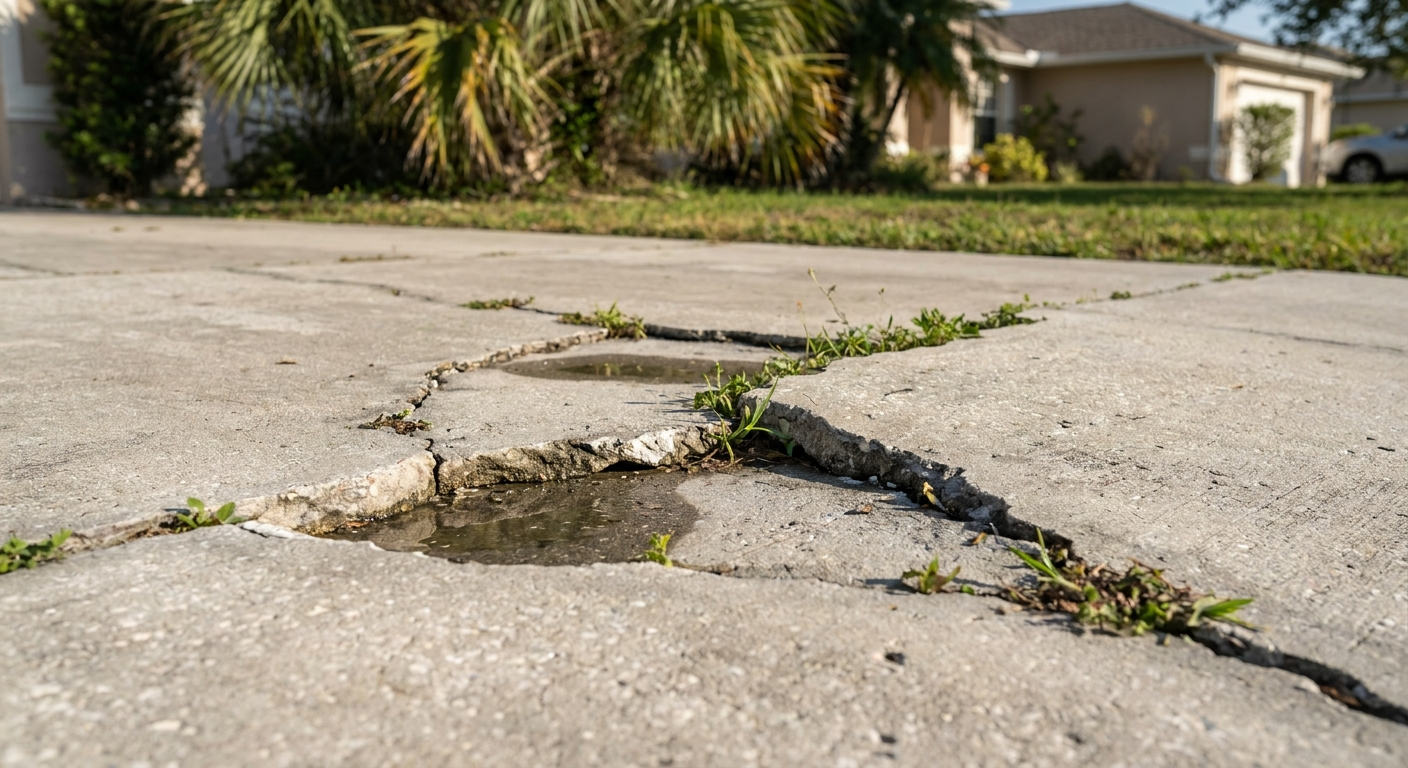
When the sides of a crack start flaking off or chipping away, the integrity is gone. The material isn't just cracked—it's weak. You can press your thumb into the edge and feel how soft or brittle it's become. That's not something you can ignore. Once the edges fail, the crack becomes a cavity. And cavities grow.
This is especially common after prolonged wet periods. The moisture works its way in, weakens the binder, and leaves the aggregate exposed. From there, it's a short trip to potholes. And potholes don't fix themselves—they get bigger, deeper, and more expensive to repair.
Standing Water Shows Up Where It Shouldn't
If you see puddles sitting in or around your cracks after a rain, that's a red flag. It means the crack is deep enough to hold water, and it's probably not draining properly. In Palm Beach County, where storms dump inches in an hour, this becomes a real issue fast. Water doesn't evaporate quickly here—it lingers. And while it lingers, it's doing damage.
Pooling water also attracts debris, algae, and mold. It stains the surface. It accelerates freeze-thaw cycles in cooler months. And it signals that the crack has likely penetrated past the surface layer and into the base. That's when repairs get complicated—and costly.
Vegetation Finds a Home in the Gaps
Weeds and grass growing out of your driveway cracks aren't just ugly—they're proof the cracks are wide and deep enough to support plant life. Seeds settle in. Soil accumulates. Roots take hold. And once those roots start growing, they push the crack even wider. It's a slow-motion demolition from the inside out.
Some homeowners try pulling the weeds by hand. That's fine for the short term, but it doesn't solve the structural issue. If plants are thriving in your driveway, the crack is already past the point of a simple patch. You need to address the gap, clean it out completely, and seal it properly—or it'll just come back.
Uneven Surfaces and Lifting Sections
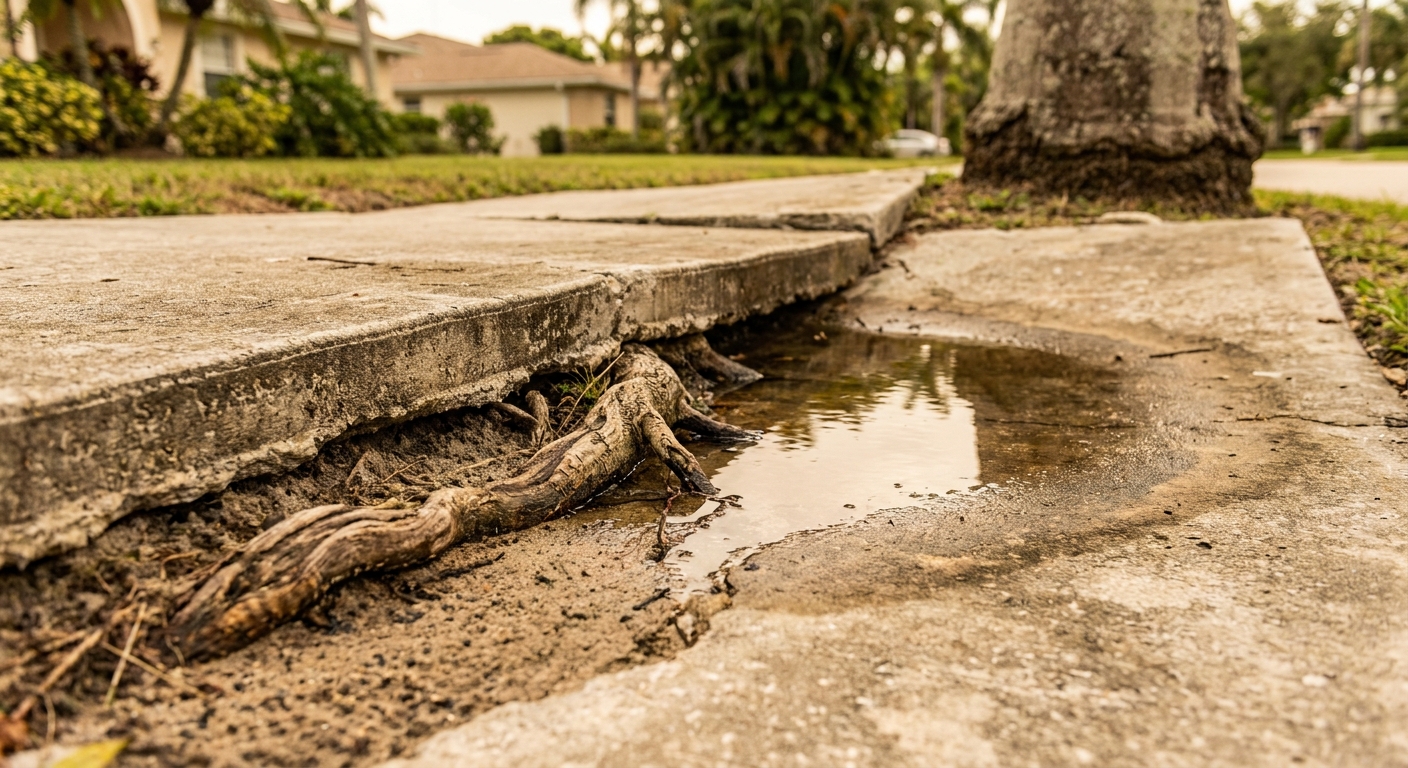
When the driveway starts to lift or dip near a crack, you're looking at foundation movement. This can be caused by soil erosion, tree roots, or poor compaction during installation. Whatever the reason, it's a serious problem. An uneven surface isn't just a tripping hazard—it's a sign that the base layer is compromised.
We've seen driveways where one side of a crack is a full inch higher than the other. That's not something you can grind down or ignore. It requires excavation, re-leveling, and proper compaction. And if you don't handle it now, the crack will continue to spread and the unevenness will get worse. Professional trip hazard repairs can address these issues before they become dangerous.
Act Before the Damage Compounds
The longer you wait, the more you'll pay. Small cracks can be sealed for a few hundred dollars. Full slab replacement? That's thousands. And in a climate like ours, the timeline from "minor issue" to "major expense" is shorter than most people think. We're not talking years—we're talking months, sometimes weeks if the conditions are right.
Regular inspections, proper drainage, and timely repairs are the only defense. If you spot any of these signs, don't put it on the back burner. Clean the crack, fill it with the right material, and seal it properly. Understanding how weather affects concrete in our region can help you time repairs effectively. Or bring in a pro who knows how to handle Palm Beach County's specific challenges with concrete driveways. Learning about protecting your driveway from Florida's sun can prevent future damage, and recognizing common concrete repair problems helps you stay ahead of deterioration. Either way, make the call before the crack makes it for you.
Let's Protect Your Driveway Together
We know how quickly small cracks can turn into big headaches in Palm Beach County. Let’s get ahead of the damage and keep your driveway looking its best for years to come. If you’re ready to take action, give us a call at 561-436-5977 or request a quote and let’s get your driveway back in shape.
‹ Back
Recent Posts
-
How Much Does a New Concrete Driveway in Palm Beach County Cost?
September 15, 2026
-
Can Concrete Grinding Make Walkways in Palm Beach County Safer?
September 1, 2026
-

-
-
Why Does Concrete in Palm Beach County Become Uneven?
July 21, 2026