


Does Your Patio in Palm Beach County Need Concrete Grinding?
Most homeowners think a patio is just concrete. Pour it, seal it, forget it. But Palm Beach County weather doesn't forget. Neither does settling soil, root pressure, or the daily grind of foot traffic and furniture. Your patio might look fine from a distance, but get close and you'll see the truth—uneven joints, rough patches, trip hazards waiting to happen. That's where concrete grinding comes in. Not a full replacement. Not a Band-Aid. A real fix that levels what's there and gives you back a surface worth using.
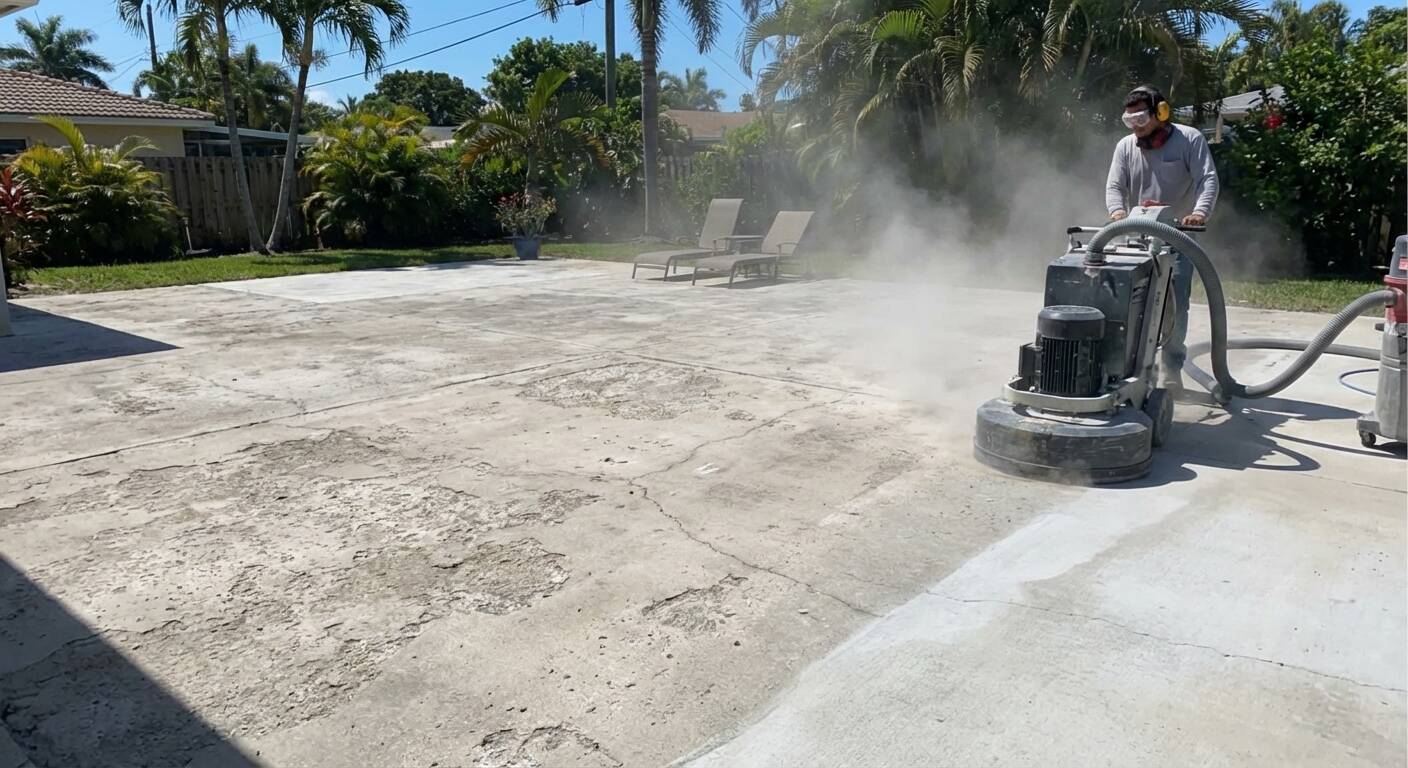
So here's what matters. If your outdoor space has turned into an obstacle course, grinding can flatten it out. If stains and wear have made it look tired, grinding strips that layer away. And if you're tired of patching cracks that keep coming back, this might be the move that actually sticks. Every patio tells a story—make sure yours isn't about neglect.
When the Surface Tells You Something's Wrong
You don't need a contractor to tell you your patio's off. You feel it when you walk barefoot. You see it when water pools in the wrong spots. You hear it when guests comment on the "character" of your concrete—which is code for "this thing's a mess."
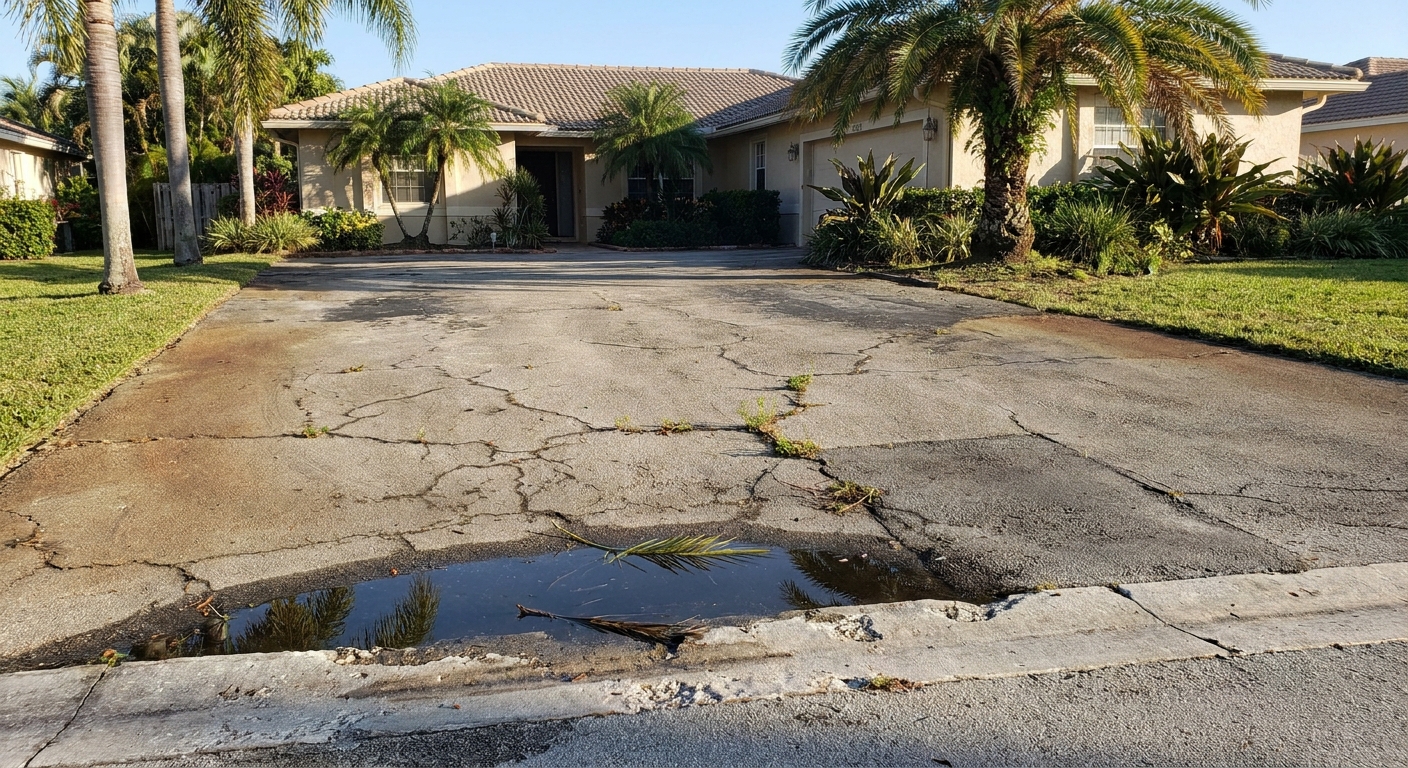
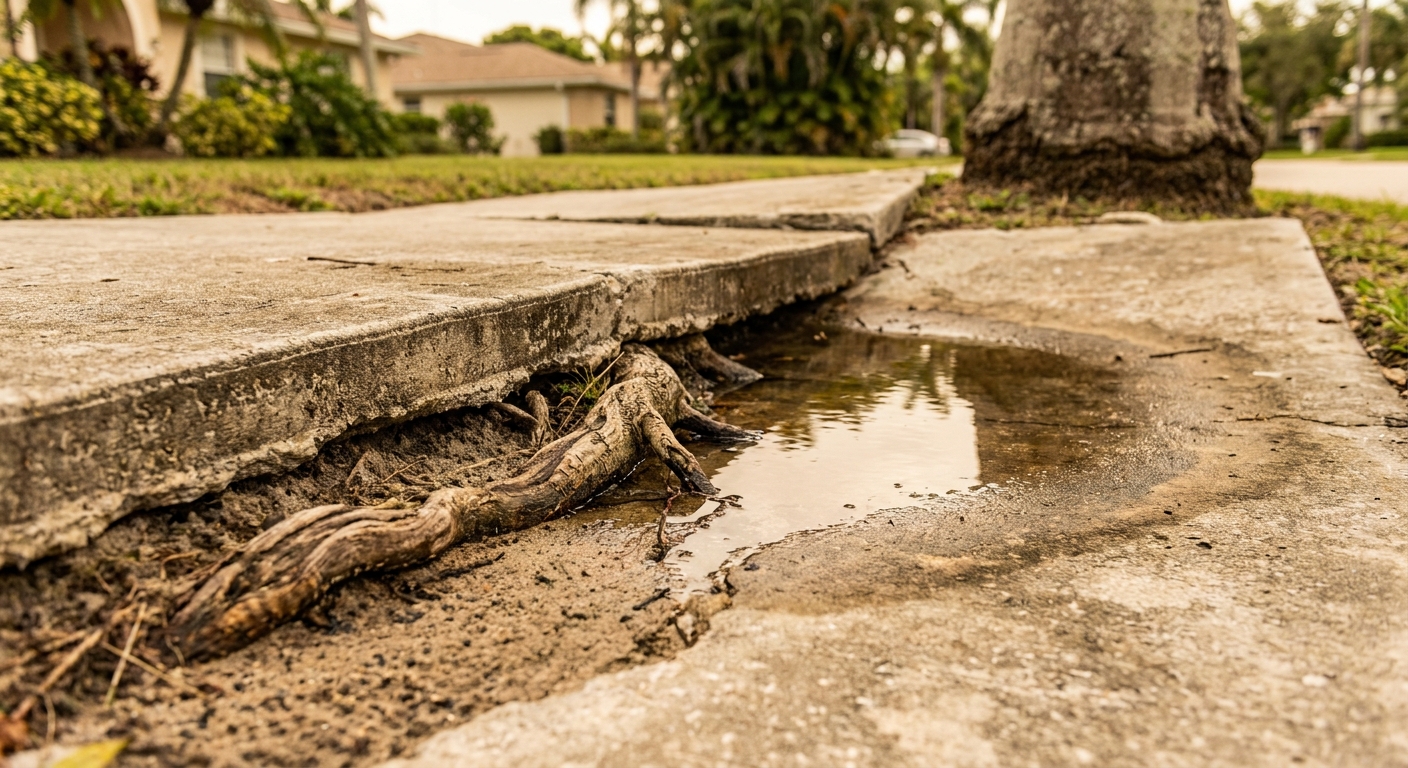
Uneven slabs happen. Soil shifts, tree roots push, and Florida's wet-dry cycle does the rest. What starts as a minor lip between sections becomes a full-blown tripping hazard. Grinding takes those edges down to nothing. No demo. No jackhammering. Just a smooth transition that makes your patio feel like one solid piece again.
The Damage You Can't Ignore
Some patio problems are cosmetic. Others are structural red flags. Knowing the difference keeps you from wasting money on the wrong fix—or worse, ignoring a real issue until it costs you more.
Here's what grinding handles best:
- Raised edges where slabs have shifted or settled unevenly
- Rough, pitted surfaces that snag bare feet or patio furniture
- Stains and discoloration that won't scrub out with a pressure washer
- Minor cracks that haven't compromised the slab's integrity
- Uneven drainage patterns that leave standing water after rain
Why Palm Beach County Patios Take a Beating
This isn't Minnesota. You're not dealing with freeze-thaw cycles. But you are dealing with humidity, salt air, and soil that moves more than most people realize. Add in the occasional tropical storm and the relentless UV exposure, and your patio's working overtime just to stay intact.
Concrete grinding doesn't stop the weather. But it does reset the surface so you're not fighting uphill. A level patio drains better. A smooth finish resists staining. And when you remove that top layer of worn, weathered concrete, you expose fresh material that's ready to take a beating for another decade.
What Grinding Actually Does for You
Grinding isn't glamorous. It's loud, dusty, and mechanical. But it works. And it works without tearing out what's already there, which means less waste, less cost, and less downtime.
Here's what you get:
- A flat, even surface that eliminates trip hazards and improves safety
- Removal of surface stains, discoloration, and weathering
- Better drainage by correcting low spots and uneven slopes
- A clean slate for sealing or resurfacing if you want to go further
- Extended lifespan for your existing concrete without full replacement
When Grinding Isn't Enough
Grinding fixes surface issues. It doesn't fix structural failure. If your patio has deep cracks, major settling, or sections that have sunk more than an inch, you're looking at a bigger problem. Grinding might smooth things out temporarily, but it won't stop the underlying movement.
Same goes for patios with widespread spalling—where the surface is flaking or crumbling. That's a sign the concrete itself is compromised, usually from water infiltration or poor installation. Grinding can clean it up, but you'll need to address the root cause or you'll be back in the same spot next year.
How to Know If Your Patio Qualifies
Walk your patio. Run your hand over the surface. Look for the obvious stuff—cracks, stains, uneven joints. Then look for the subtle stuff—areas where water doesn't drain, spots where the concrete feels rough or gritty, sections that seem higher or lower than the rest.
If you're seeing any of these, grinding's worth considering:
- Visible height differences between adjacent slabs
- Surface roughness that makes the patio uncomfortable to use
- Stains or discoloration that detract from the overall look
- Minor cracks that haven't spread or widened significantly
- Drainage issues caused by uneven slopes or low spots
What the Process Looks Like
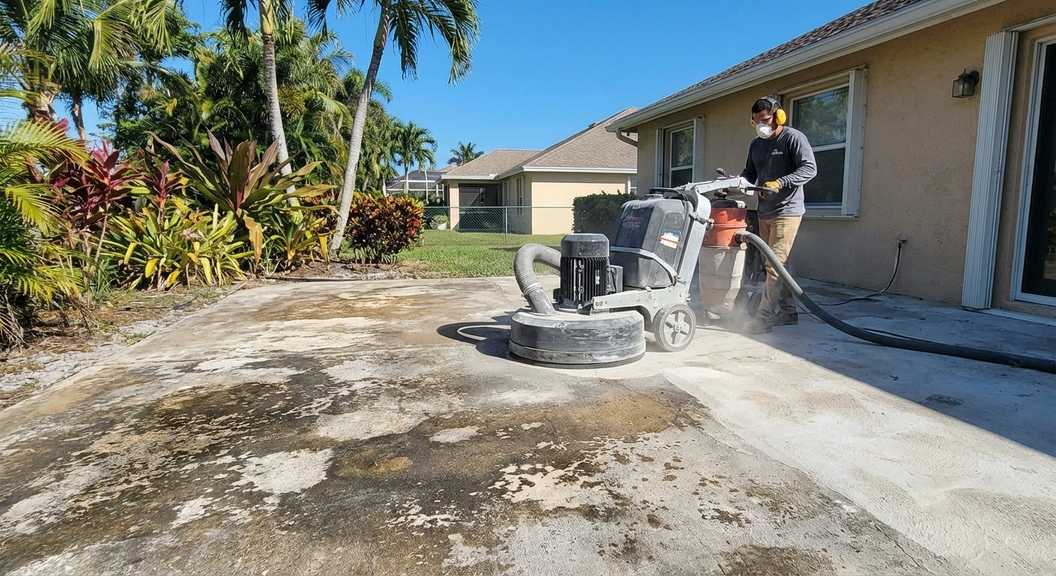
A good contractor shows up with industrial grinders, not a hand sander. These machines use diamond-tipped blades to shave down the concrete in controlled passes. The depth depends on what you're fixing—sometimes it's just a few millimeters, other times it's a quarter inch or more.
The work is methodical. They'll mark problem areas, grind them down, check for level, and repeat until the surface is consistent. Dust control matters here—most pros use wet grinding or vacuum systems to keep the mess contained. Once the grinding's done, they'll clean the surface and, if you want, apply a sealer to protect the fresh concrete.
Why DIY Isn't the Move
You can rent a concrete grinder. You can watch YouTube videos. You can probably even get the machine started. But controlling it? Keeping the surface level? Not gouging the concrete or leaving swirl marks? That takes experience.
Here's what pros bring to the table:
- Industrial-grade equipment that handles the job efficiently
- Experience reading concrete and knowing how much to remove
- Dust control systems that keep your yard from turning into a construction zone
- Liability coverage if something goes wrong
- A finished product that actually looks professional
Maintenance After Grinding
Grinding resets your patio, but it doesn't make it indestructible. You'll still need to clean it regularly, reseal it every few years, and address any new cracks before they spread. The difference is you're starting from a solid baseline instead of trying to patch over years of neglect.
Keep furniture pads under heavy pieces. Sweep off debris before it grinds into the surface. And if you see water pooling in new spots, don't ignore it—that's your patio telling you something's shifting again.
Getting It Done Right
Your patio isn't just concrete. It's where you spend your mornings, host your weekends, and let your kids run around without worrying about twisted ankles. Grinding gives you that space back—level, safe, and ready to use. But only if you treat it like the investment it is. That means hiring someone who knows what they're doing, asking the right questions, and making sure the work gets documented.
Palm Beach County has no shortage of contractors. Find one who shows up on time, explains the process without jargon, and backs their work with something more than a handshake. Your patio's been through enough. Give it the reset it deserves.
Ready to Reclaim Your Patio?
Let's bring your patio back to life so you can enjoy every gathering, morning coffee, and barefoot walk without worry. We know what Palm Beach County patios go through, and we're here to help you get the most out of your outdoor space. Give us a call at 561-436-5977 or request a quote today—let's make your patio a place you love again.
‹ Back
Recent Posts
-
How Much Does a New Concrete Driveway in Palm Beach County Cost?
September 15, 2026
-
Can Concrete Grinding Make Walkways in Palm Beach County Safer?
September 1, 2026
-

-
-
Why Does Concrete in Palm Beach County Become Uneven?
July 21, 2026