


Are Cracks in Your Palm Beach County Pool Deck Getting Worse?
Most homeowners see a crack and think it's just cosmetic. A little line in the concrete, nothing urgent. But in Palm Beach County, that crack isn't sitting still — and if you think it'll stay small, you're in for a surprise. The heat, the humidity, the storms, the soil shifts — they all conspire to turn hairline fractures into full-blown structural headaches. Your pool deck might look fine from a distance, but up close, those cracks are telling a story. And it's not a good one.
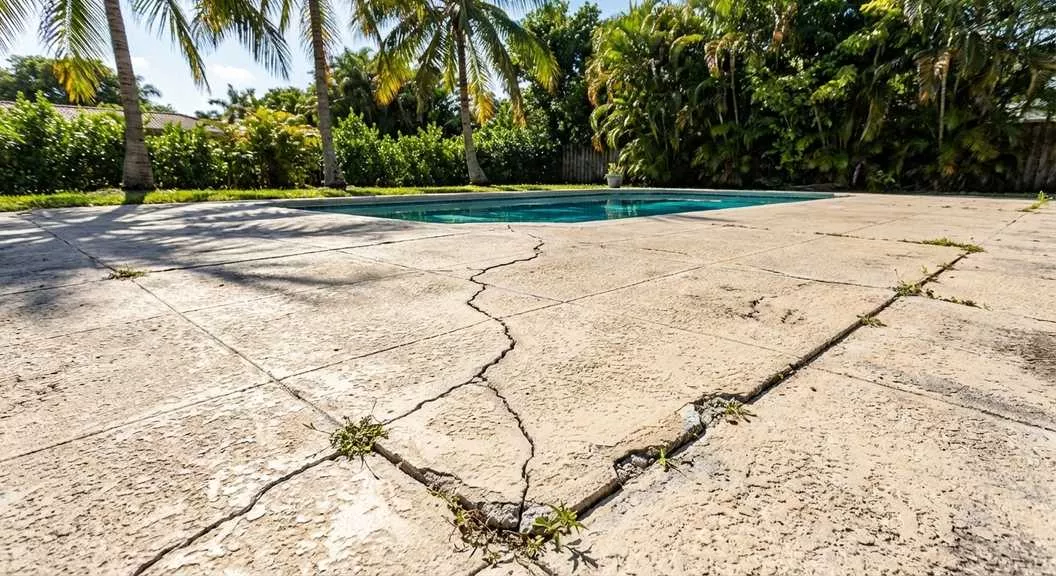
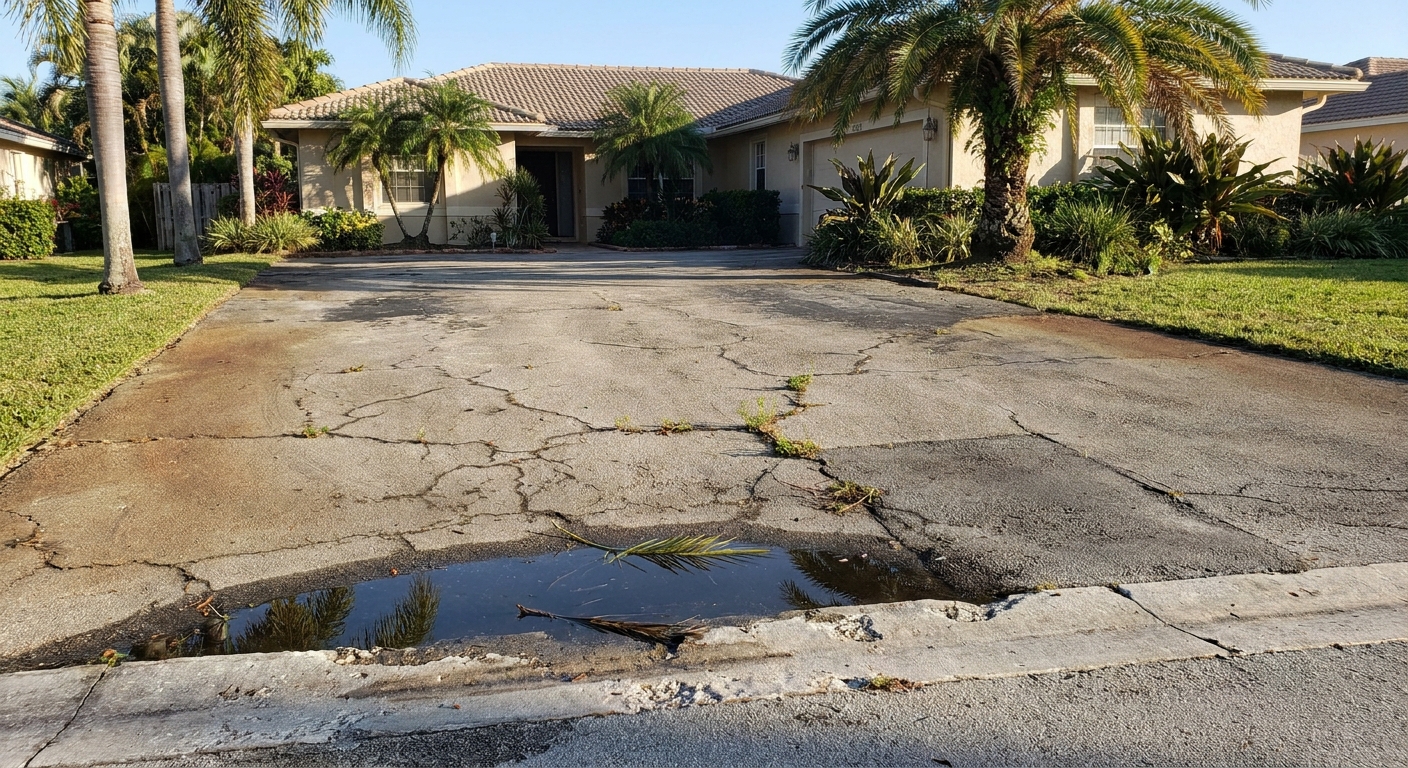
So here's what matters. If you've got cracks that weren't there last season, or ones that have doubled in width since you first noticed them, that's not normal wear. That's progression. And progression means something underneath is moving, settling, or washing away. Every crack is a clue. Every widening gap is a warning. And every day you wait is another chance for water to get where it shouldn't.
The Climate Isn't Doing You Any Favors
Palm Beach County weather is brutal on concrete. You've got relentless sun baking the surface, afternoon downpours flooding the ground, and humidity that never quits. That combination doesn't just age your deck — it actively breaks it down. UV rays weaken the surface. Water seeps into pores and expands when it heats up. The ground beneath swells and contracts with every storm cycle.
Add pool chemicals and saltwater into the mix, and you've got a recipe for deterioration. Chlorine eats away at sealant. Salt accelerates corrosion. And once the protective layer is compromised, the concrete itself becomes vulnerable. It's not a question of if cracks will form — it's when, and how fast they'll spread.
What's Happening Beneath the Surface
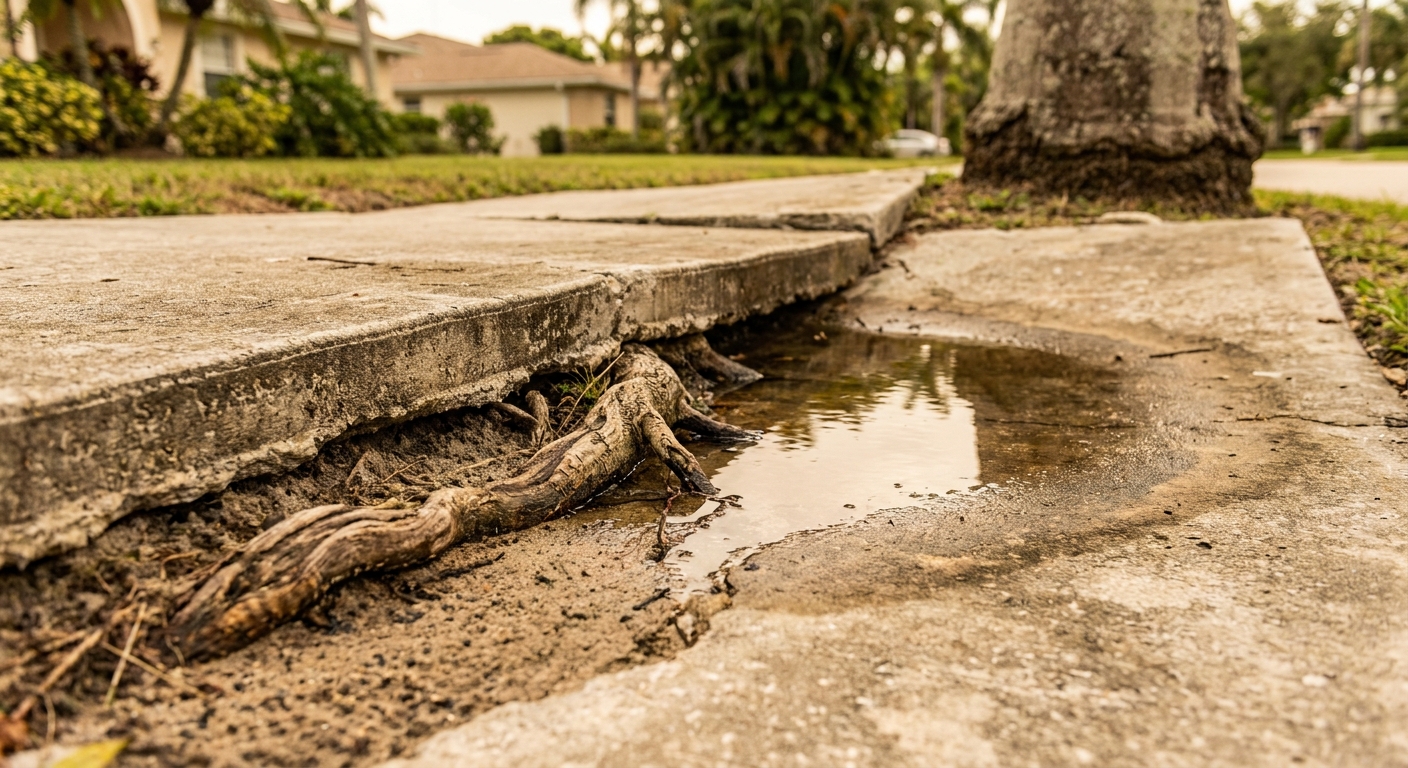
Cracks don't just appear because your deck is old. They show up because something underneath has shifted. Maybe the soil settled unevenly. Maybe drainage is funneling water into one spot, eroding the base. Maybe tree roots are pushing up from below. Whatever the cause, the result is the same — your deck loses support, and the concrete can't hold its shape.
When water gets under your deck, it doesn't just sit there. It moves. It erodes. It creates voids. And those voids lead to sinking, lifting, or cracking that spreads outward like a spiderweb. You might see one crack today and three more next month. That's not bad luck — that's physics.
Signs Your Cracks Are Getting Worse
Not all cracks are created equal. Some stay dormant for years. Others grow fast. Here's what to watch for if you're trying to figure out whether your deck is deteriorating:
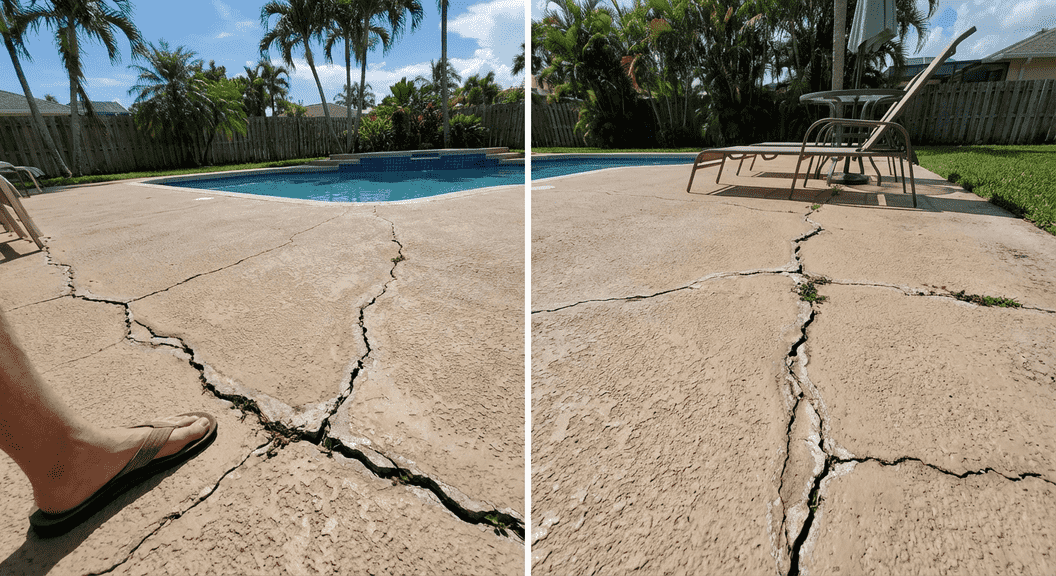
- Cracks that have widened since you first noticed them
- New cracks appearing in areas that were previously intact
- Sections of the deck that feel uneven or have started to tilt
- Loose or shifting pavers, tiles, or surface materials
- Water pooling in areas where it didn't before
The Risks You're Taking by Waiting
Ignoring cracks doesn't make them go away. It just gives them time to get worse. And the longer you wait, the more expensive the fix becomes. What starts as a simple resurfacing job can turn into a full deck replacement if the foundation is compromised.
But cost isn't the only issue. Safety is. Uneven surfaces and widening cracks are trip hazards, especially around a pool where people are barefoot and distracted. Kids running. Guests carrying drinks. One wrong step and someone's going down. And if water is undermining the structure, you could be looking at a collapse in the worst-case scenario.
What Happens When Water Gets In
Water is the enemy of every pool deck. Once it finds a crack, it doesn't stop. It seeps down, saturates the soil, and starts eroding the base. In Palm Beach County, where rain is frequent and heavy, that process accelerates. You're not dealing with a slow drip — you're dealing with repeated flooding that washes away support material and creates voids.
Those voids lead to sinking. Sinking leads to more cracks. More cracks let in more water. It's a cycle that feeds itself, and it doesn't stop until you intervene. The longer it goes, the more damage accumulates — not just to the deck, but potentially to the pool structure itself.
When to Call in a Professional
If you're seeing any of the warning signs, it's time to get an expert opinion. A qualified contractor can assess the damage, identify the root cause, and recommend a solution that actually fixes the problem — not just covers it up. Here's what a proper evaluation should include:
- Inspection of crack patterns and progression
- Assessment of drainage and water flow around the deck
- Evaluation of soil stability and foundation support
- Testing for structural integrity and load-bearing capacity
- Recommendations for repair, resurfacing, or replacement
Repair Options That Actually Work
Depending on the severity of the damage, you've got a range of options. Minor cracks can often be filled and sealed, especially if the underlying structure is still sound. Resurfacing can give your deck a fresh look while adding a protective layer. But if the foundation is compromised, you're looking at more extensive work — possibly including mudjacking, slab replacement, or full reconstruction.
The key is matching the solution to the problem. Slapping a patch on a crack that's caused by soil erosion won't hold. You need to address the root cause, or you'll be back in the same spot six months later. A good contractor will tell you what's necessary and what's overkill.
Preventive Measures That Buy You Time
Once you've dealt with existing cracks, the goal is to keep new ones from forming. That means staying on top of maintenance and addressing issues before they escalate. Here's what actually makes a difference:
- Proper drainage systems to divert water away from the deck
- Regular sealing to protect against moisture and chemical damage
- Routine inspections to catch small cracks before they spread
- Professional installation and quality materials for any repairs
- Monitoring soil conditions and addressing settling or erosion
Why DIY Fixes Usually Fail
It's tempting to grab some concrete filler and tackle cracks yourself. And for tiny, surface-level hairline cracks, that might hold for a while. But most cracks in Palm Beach County pool decks are symptoms of bigger issues. Filling them without addressing the cause is like putting a Band-Aid on a broken bone.
DIY repairs also tend to lack the durability and flexibility needed to withstand the region's climate. Professional-grade materials and techniques are designed to handle expansion, contraction, and moisture exposure. Home improvement store fillers? Not so much. If you want a fix that lasts, bring in someone who knows what they're doing.
The Cost of Doing Nothing
We've seen homeowners put off repairs for months, even years, thinking they're saving money. What they're actually doing is letting a manageable problem turn into a major expense. A $500 crack repair becomes a $5,000 deck replacement. A simple drainage fix becomes a foundation overhaul.
And that's just the financial side. There's also the liability. If someone gets hurt on your property because of a cracked, uneven deck, you're on the hook. Homeowner's insurance might cover it, but your rates will reflect the claim. And if the damage was clearly neglected, coverage might not apply at all.
What Good Contractors Look For
When you bring in a professional, they should be doing more than just looking at the cracks. They should be evaluating the entire system — drainage, soil, foundation, surface condition, and more. Here's what separates a thorough assessment from a quick glance:
- Detailed inspection of crack width, depth, and location
- Analysis of drainage patterns and water accumulation
- Soil testing to identify settling or erosion issues
- Review of previous repairs and their effectiveness
- Clear explanation of findings and recommended solutions
Documentation Protects You Later
If you're getting work done, make sure everything is documented. Photos of the damage before and after. Written estimates and invoices. Warranties on materials and labor. If something goes wrong down the line, you'll need proof of what was done and when.
This is especially important if you're planning to sell your home. Buyers will ask about pool deck condition, and having records of professional repairs shows you took care of the property. It also protects you from liability if issues arise after the sale.
Don't Wait for the Deck to Fail
Cracks don't heal themselves. They don't stop spreading because you ignore them. In Palm Beach County, where the environment is actively working against your pool deck, waiting is the worst strategy. The sooner you address the problem, the less it costs and the safer your property becomes. Get it checked. Get it fixed. And get back to enjoying your pool without wondering when the next crack will show up. For professional concrete services, including concrete grinding and custom pool deck features, reach out to experienced contractors who understand the unique challenges of Florida's climate.
Let’s Protect Your Pool Deck Together
We know how quickly small cracks can turn into big problems in Palm Beach County. Let’s get ahead of the damage and keep your pool area safe, beautiful, and ready for every season. If you’re ready for honest answers and real solutions, give us a call at 561-436-5977 or request a quote today—we’re here to help you enjoy your backyard with confidence.
‹ Back
Recent Posts
-
How Much Does a New Concrete Driveway in Palm Beach County Cost?
September 15, 2026
-
Can Concrete Grinding Make Walkways in Palm Beach County Safer?
September 1, 2026
-

-
-
Why Does Concrete in Palm Beach County Become Uneven?
July 21, 2026