


Should You Repair or Replace Uneven Concrete in Palm Beach County?
Most property owners see uneven concrete and think it's just cosmetic. A little crack here, a sunken slab there. But the ground beneath doesn't care what it looks like — and if you ignore what's happening below the surface, you're setting yourself up for bigger problems. Concrete doesn't settle on its own. Something pushed it, pulled it, or washed it out. And until you know what that something is, you're guessing at the fix.
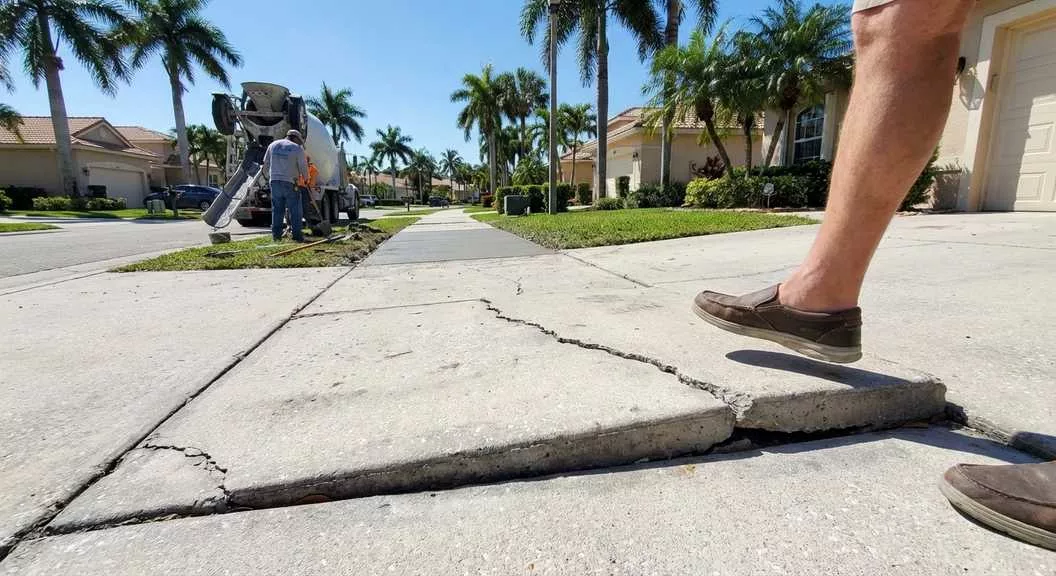
So here's what matters. If you're dealing with shifting slabs or cracked walkways, that's not just an eyesore. It's a liability. Every uneven edge is a trip hazard. Every gap is a place for water to pool and erode further. And every day you wait, the repair gets more expensive — or turns into a full replacement whether you planned for it or not.
What's Actually Moving Your Concrete
Palm Beach County sits on sandy soil that doesn't hold up the way you'd expect. Add in tropical storms, root systems from mature trees, and drainage that wasn't designed for this much rain, and you've got the perfect recipe for slab movement. Most of the time, it's not the concrete that failed — it's what's underneath.
We see the same patterns over and over. Soil washes out after heavy rain. Tree roots expand and lift sections near landscaping. Poor compaction during the original pour leaves voids that collapse under weight. And once water gets under a slab, it doesn't just sit there — it keeps working, keeps eroding, keeps making things worse.
- Erosion from stormwater runoff pulling soil out from under slabs
- Root intrusion from palms, oaks, and other large trees common in the area
- Inadequate base prep during the original installation
- Drainage issues that funnel water directly beneath concrete surfaces
- Natural settling in sandy or fill soils that weren't properly stabilized
When a Patch Job Actually Works
Not every sunken slab needs to be ripped out. If the concrete itself is still solid — no major cracking, no crumbling edges, no structural compromise — you can often bring it back to level without starting over. Modern lifting techniques like polyurethane injection can raise a slab in hours, not days, and the surface is usable almost immediately.
Repairs make sense when the damage is isolated and the underlying cause has been addressed. If you've fixed the drainage, trimmed back the roots, or stabilized the soil, a repair can buy you years of service. But if you're patching over the same problem that caused the issue in the first place, you're just delaying the inevitable.
- Mudjacking or foam injection to lift sunken sections back into place
- Crack sealing and surface patching for minor cosmetic damage
- Resurfacing overlays that restore appearance without full removal
- Targeted slab stabilization when only one or two sections have shifted
When You're Past the Point of Fixing It
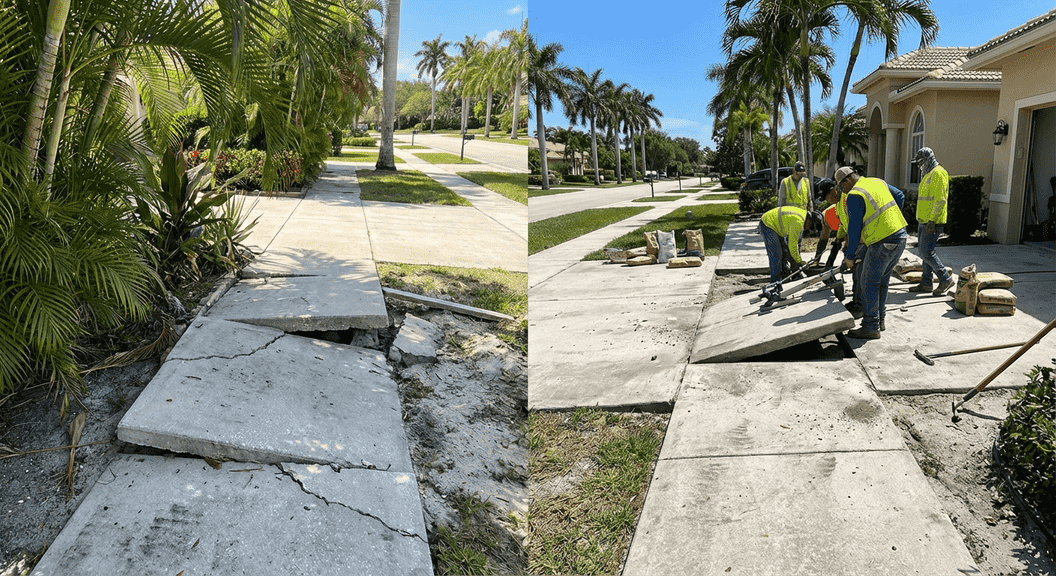
Some concrete is just done. If the slab is riddled with cracks, spalling at the edges, or sinking in multiple places, repairs won't hold. You'll spend money on a temporary fix and end up replacing it anyway — except now you've wasted time and budget on something that didn't last.
Replacement becomes the smarter move when the damage is widespread or when the base has failed beyond what lifting can correct. If the soil is unstable, if there's ongoing water intrusion, or if the concrete is old enough that it's losing structural integrity, starting fresh is the only way to get a surface that's safe and reliable long-term.
- Severe cracking across multiple slabs or large surface areas
- Spalling or flaking that exposes aggregate and weakens the slab
- Repeated sinking in the same spots despite previous repairs
- Concrete that's reached or exceeded its expected lifespan
- Major redesign or layout changes that require new pours anyway
South Florida Conditions Change the Math
What works in other parts of the country doesn't always apply here. The combination of high humidity, intense sun, and near-constant moisture means concrete in Palm Beach County takes a beating. Add in the fact that most properties sit on sandy or fill soils, and you've got conditions that accelerate settling and erosion.
Local building codes also factor in. Some municipalities have specific requirements for base preparation, drainage, and slab thickness. If you're replacing concrete, you'll need to meet current standards — which may be stricter than what was in place when the original slab was poured. And if you're in an HOA community, there may be aesthetic or material requirements you'll need to follow.
- Sandy soils that compact unevenly and allow water infiltration
- Heavy seasonal rains that test drainage systems year-round
- Building codes that mandate updated base prep and reinforcement
- HOA rules that dictate finishes, colors, or installation methods
Get a Real Assessment Before You Decide
Don't guess. Bring in someone who knows what they're looking at — not just the surface damage, but what's causing it. A qualified contractor will check the soil, evaluate drainage, measure the extent of movement, and tell you whether a repair will hold or if you're better off replacing.
That assessment should include documentation. Photos, measurements, notes on soil conditions, and a clear explanation of what's happening and why. If you're filing an insurance claim or planning to sell the property, that paper trail matters. And if you're trying to decide between two contractors, the one who takes the time to explain the problem is usually the one who'll fix it right.
Stop Waiting for It to Get Worse
Uneven concrete doesn't fix itself. It shifts more. It cracks wider. It becomes a bigger liability and a more expensive problem. Whether you repair or replace depends on the damage, the cause, and how long you need the fix to last — but doing nothing is the worst option on the table.
Work with a contractor who understands Palm Beach County's soil, climate, and code requirements. Get the assessment. Make the call. And get your concrete grinding or driveway, patio, or pool deck back to level before someone trips, before water does more damage, or before a repair turns into a full replacement you didn't budget for. For more information about our concrete services, feel free to contact us.
Let’s Solve Your Concrete Problems Together
We know how frustrating uneven concrete can be, and we’re here to help you make the right call for your property. Let’s take the guesswork out of repairs and replacements—reach out to us and we’ll walk you through your options, step by step. Call us at 561-436-5977 or request a quote today so we can get your concrete back in shape and your property safe again.
‹ Back
Recent Posts
-
How Much Does a New Concrete Driveway in Palm Beach County Cost?
September 15, 2026
-
Can Concrete Grinding Make Walkways in Palm Beach County Safer?
September 1, 2026
-
-
-
Why Does Concrete in Palm Beach County Become Uneven?
July 21, 2026