


When Should You Schedule Trip Hazard Repairs in Palm Beach County?
Most property owners treat sidewalk damage like a cosmetic issue. A little crack here, a lifted slab there. But the courts see something else entirely — and so do insurance adjusters. Trip hazards aren't just eyesores. They're liability traps waiting to snap shut. And if you think you can wait until someone complains, you're already behind.
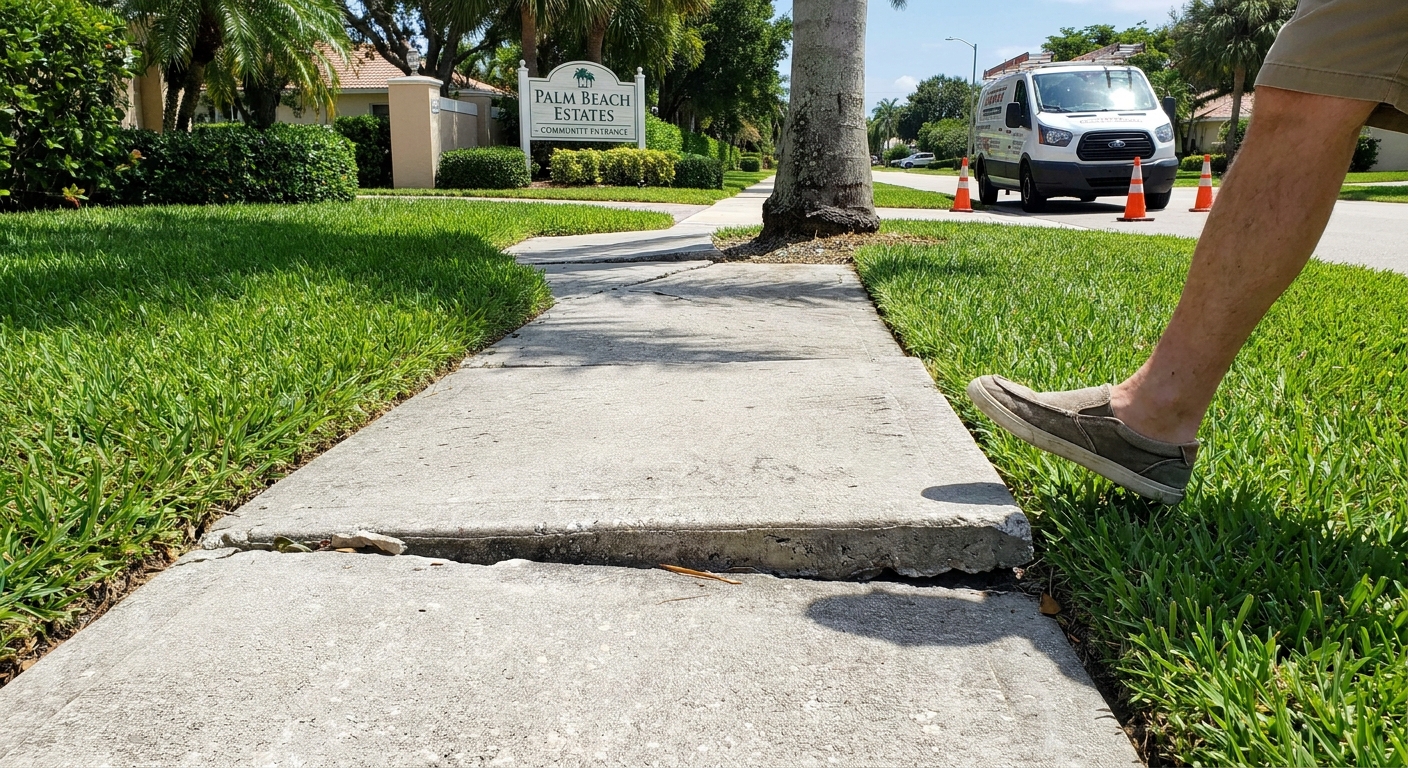
The reality is straightforward. If you manage property where people walk, you're responsible for keeping those surfaces level and safe. Every uneven edge should be documented. Every repair should be prioritized. And every decision about when to fix something should be based on actual risk — not just what looks bad from the curb.
The Hazards That Get Ignored Until Someone Falls
Palm Beach County properties face constant pressure from weather, roots, and settling soil. What starts as a minor lip can turn into a full-blown trip zone in weeks. And unlike interior damage, outdoor hazards are visible to everyone — visitors, delivery drivers, inspectors, and attorneys.
Concrete doesn't heal itself. Neither does asphalt. The longer you wait, the worse it gets. Water seeps in, roots push up, and that quarter-inch difference becomes two inches. By then, it's not just a repair issue — it's a negligence issue.
What Counts as a Real Problem
Not every surface imperfection demands immediate action. But certain conditions cross the line from wear-and-tear into actual danger. Understanding the difference keeps you focused on what matters.
Here's what triggers red flags:
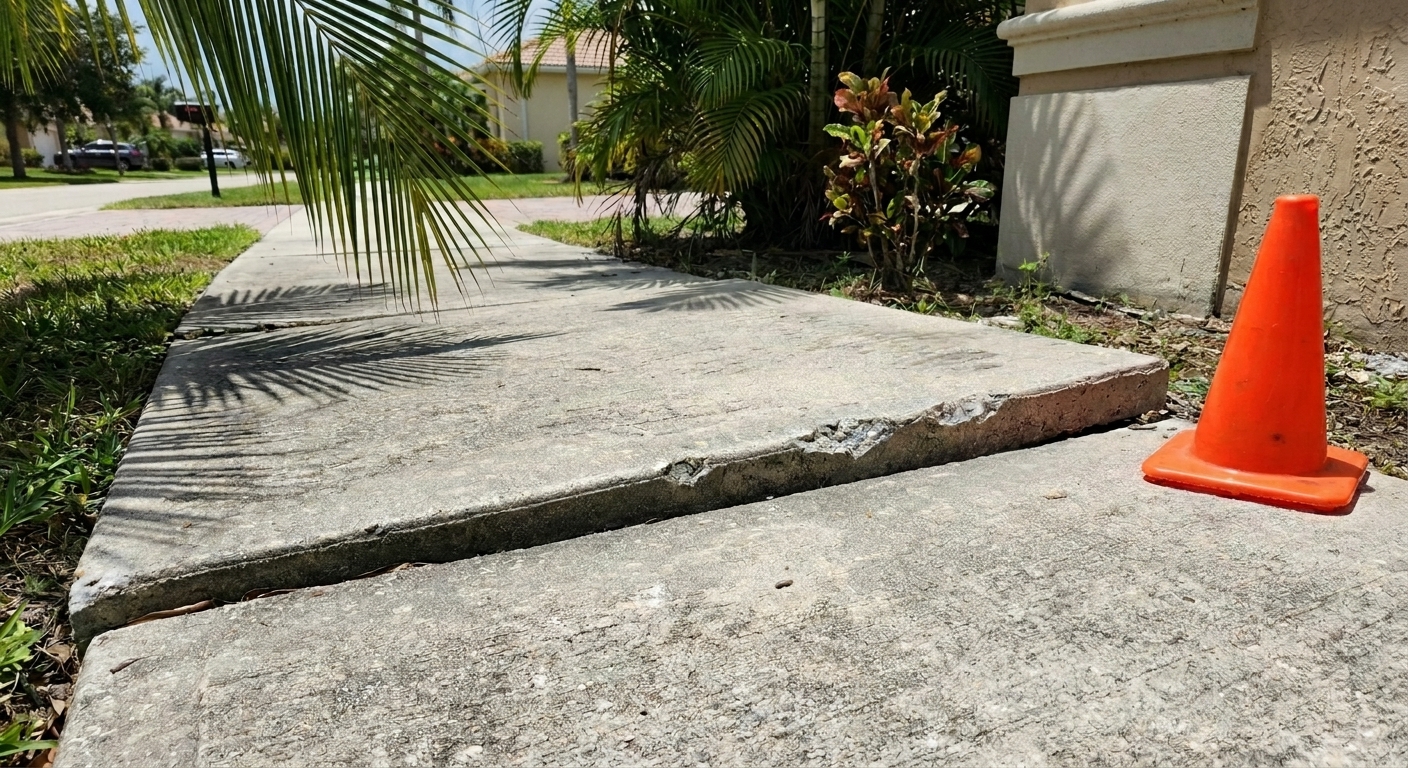
- Vertical displacement over half an inch between slabs
- Cracks wide enough to catch a shoe edge or mobility device
- Pavers that shift or rock underfoot
- Missing chunks of concrete near high-traffic zones
- Tree roots pushing through walking surfaces
Liability Doesn't Wait for Your Schedule
Florida law puts the burden squarely on property owners. If someone trips and gets hurt, you're expected to prove you took reasonable steps to prevent it. That means regular inspections, timely repairs, and actual documentation — not just good intentions.
Ignoring a known hazard is the fastest way to lose a premises liability case. And "known" doesn't require a formal complaint. If it's visible during a normal walk-through, it counts. Courts don't reward procrastination, and neither do insurance carriers when your rates jump after a claim.
When Waiting Makes Things Worse
There's a window where small repairs stay small. Miss it, and you're looking at full replacement instead of grinding or leveling. Timing isn't just about preventing injuries — it's about controlling costs and avoiding bigger headaches down the road.
Schedule repairs immediately if:
- The hazard exceeds three-quarters of an inch in height difference
- It's located in a main walkway or entrance area
- Recent storms or ground movement caused sudden changes
- You've received complaints or near-miss reports
- An inspection or audit flagged the area
After Storms, Don't Assume Everything Held
Hurricane season and heavy rain do more than flood streets. They shift soil, expose roots, and crack slabs that looked fine the day before. Palm Beach County properties take a beating from weather, and not all damage is immediately obvious.
Walk your property after every major storm. Look for new cracks, settlement, or areas where water pooled and eroded support. What seems stable on the surface can be compromised underneath. Waiting for someone to trip isn't a strategy — it's a gamble. Properties that endure Florida's climate require proactive attention year-round.
Routine Inspections Catch Problems Before They Escalate
We recommend quarterly walk-throughs for commercial properties and twice a year for residential communities. Bring a camera, measure anything questionable, and keep dated records. If you spot something borderline, mark it and track whether it's getting worse.
Documentation protects you in two ways:
- It proves you were monitoring conditions actively
- It gives you a timeline to show repairs were scheduled appropriately
- It helps prioritize which hazards need immediate attention
- It creates a defensible record if a claim gets filed
High Traffic Means High Priority
A crack in a back corner of your parking lot is different from one right outside your main entrance. Risk scales with exposure. The more people who walk over a surface daily, the faster you need to act when something goes wrong.
Before hosting events, open houses, or seasonal traffic surges, inspect every public walkway. Fix anything questionable ahead of time. Increased foot traffic multiplies your exposure, and you don't want your busy season interrupted by an injury claim. Many Palm Beach County walkways harbor hazards that become dangerous under heavy use.
Buyers and Tenants Notice What You've Neglected
Thinking about selling or leasing? Trip hazards will come up during inspections, and they'll either cost you in negotiations or delay your closing. Fixing them beforehand shows the property was maintained properly and removes a bargaining chip from the other side.
Clean, level walkways signal that the owner cared about details. Cracked, uneven paths suggest deferred maintenance everywhere else. First impressions matter, and nothing says "problem property" like obvious safety issues at the front door.
Choosing the Right Fix Saves Money Later
Not every trip hazard requires jackhammering and replacement. Minor height differences can be ground down. Sunken slabs can be lifted with foam injection. Loose pavers can be reset. But those options disappear if you wait too long.
Work with a contractor who understands the difference between a quick fix and a real solution. Ask about:
- Concrete grinding for vertical lips under two inches
- Slab jacking or polyurethane foam lifting for settled sections
- Full replacement when the underlying base has failed
- Root barriers if tree growth is the cause
- Drainage improvements to prevent future settling
Professional concrete grinding can eliminate minor height differences efficiently, and understanding the benefits of concrete grinding helps property owners make informed decisions about maintenance strategies.
Repairs That Hold Up in Court
If a claim happens, you'll need to show more than just receipts. Courts want proof that the repair was appropriate, completed correctly, and addressed the actual hazard. Sloppy patches or temporary fixes don't count as reasonable action — they just prove you knew there was a problem.
Get permits if required. Use licensed contractors. Keep photos of before, during, and after. File those records where you can find them fast. Because when an attorney asks what you did to prevent the accident, "I think we fixed that a while ago" isn't going to cut it. Professional trip hazard repairs provide documentation and quality that stand up under scrutiny.
Act on What You Know
Delaying trip hazard repairs doesn't make them cheaper or easier. It just stacks up risk while the clock ticks. Properties in Palm Beach County face enough challenges from weather and wear without adding preventable liability to the list. The hazards are out there — walking past them doesn't make them go away. Scheduling the repair does.
Let's Make Your Property Safer Together
Staying ahead of trip hazards protects everyone who sets foot on your property and keeps your investment secure. When you're ready to address those problem areas, let's work together to find the right solution and keep your walkways safe year-round. Call us at 561-436-5977 or request a quote and see how easy it is to get started.
‹ Back
Recent Posts
-
-
When Should You Schedule Trip Hazard Repairs in Palm Beach County?
October 27, 2026
-
Can a Concrete Patio in Palm Beach County Add Value to Your Home?
October 13, 2026
-
Is Your Pool Deck in Palm Beach County Becoming Slippery?
September 29, 2026
-
How Much Does a New Concrete Driveway in Palm Beach County Cost?
September 15, 2026