


Is Your Concrete Driveway in Palm Beach County Starting to Sink?
Most homeowners think a driveway is just concrete and dirt. Pour it, let it cure, forget about it. But the ground beneath doesn't stay still — and if you're not paying attention, you're setting yourself up for a mess. Driveways don't just crack for no reason. They sink because something underneath gave way. And in Palm Beach County, that something is usually water, sand, or both.
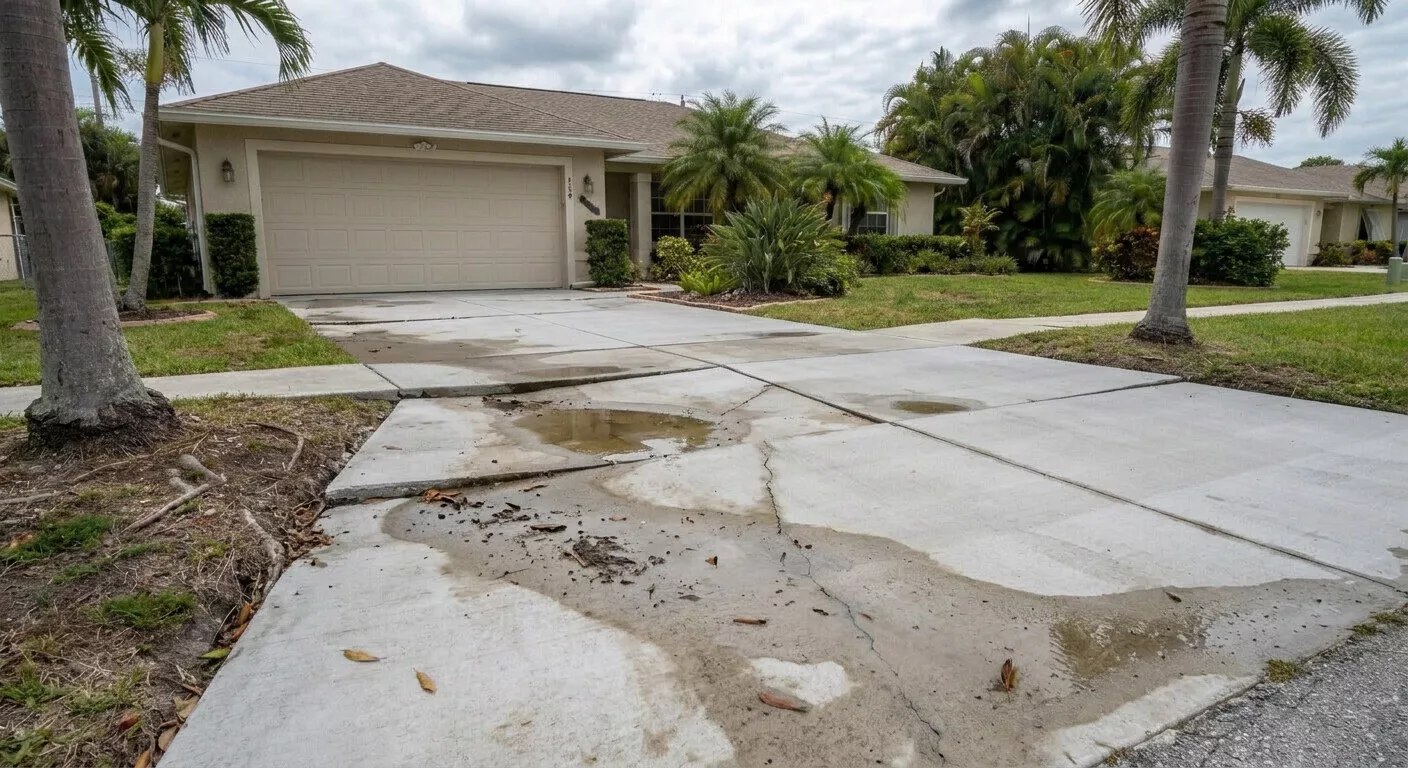
So here's the reality. If your driveway's dropping, it's not going to fix itself. Every inch it settles creates new problems — drainage issues, tripping hazards, foundation stress. You can ignore it for a while, but eventually, you'll pay more to fix what you should've caught early. The key is knowing what you're looking at and acting before it spirals.
The Ground Beneath Isn't as Solid as You Think
Concrete slabs rely on stable soil. When that soil shifts, compacts, or washes away, the slab follows. In South Florida, sandy soil and heavy rainfall create the perfect storm for erosion. Water seeps under the driveway, carries particles away, and leaves voids that the concrete eventually collapses into. It's not a question of if — it's when.
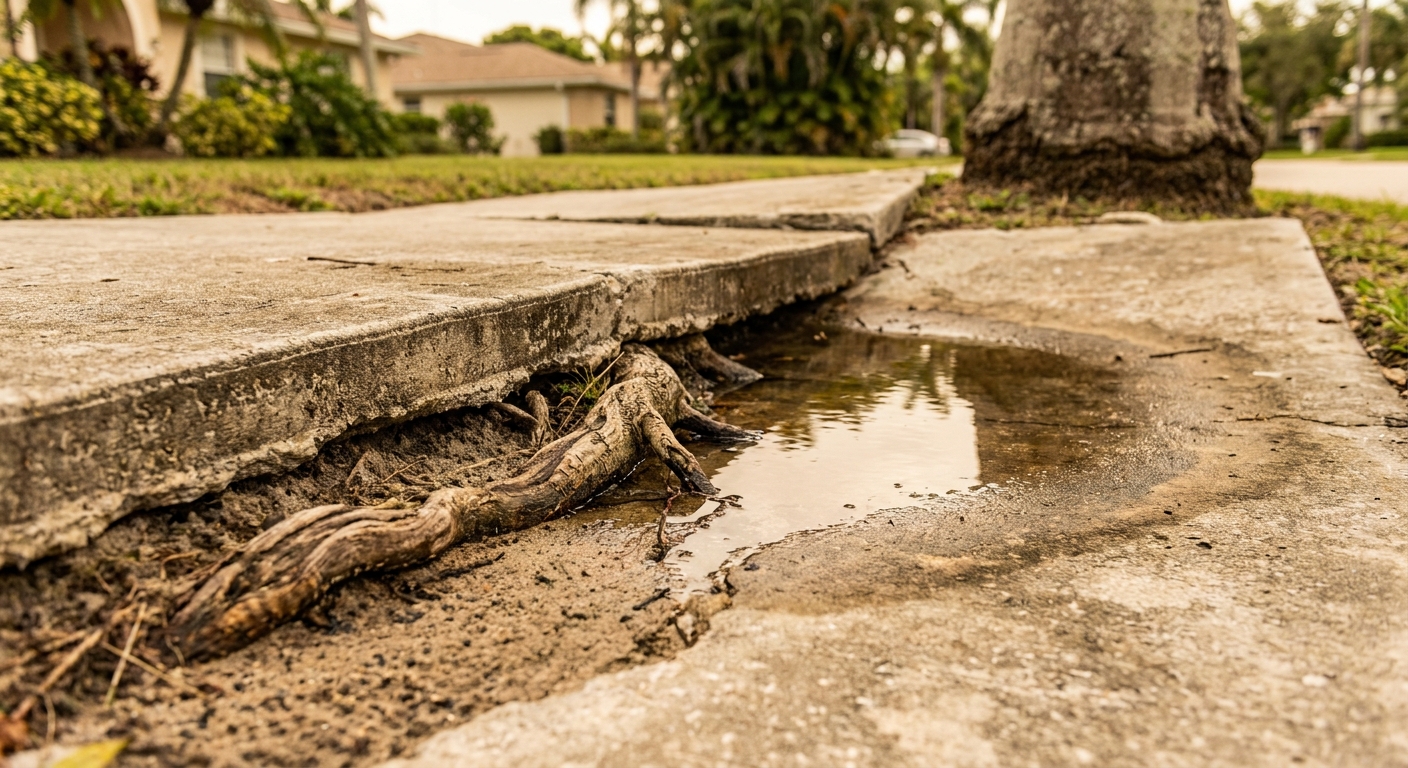
But erosion isn't the only culprit. Poor compaction during installation means the base was never solid to begin with. Tree roots can push through and displace soil. Heavy vehicles can compress weak spots faster than you'd expect. And once the process starts, it accelerates. What begins as a small dip turns into a full section that's noticeably lower than the rest.
- Water runoff from storms or poor grading erodes the base layer
- Tree roots grow underneath and shift the soil structure
- Weak or improperly compacted fill material settles unevenly
- Repeated weight from vehicles compresses soft spots over time
- Drainage systems that fail or were never installed properly
What Sinking Actually Looks Like
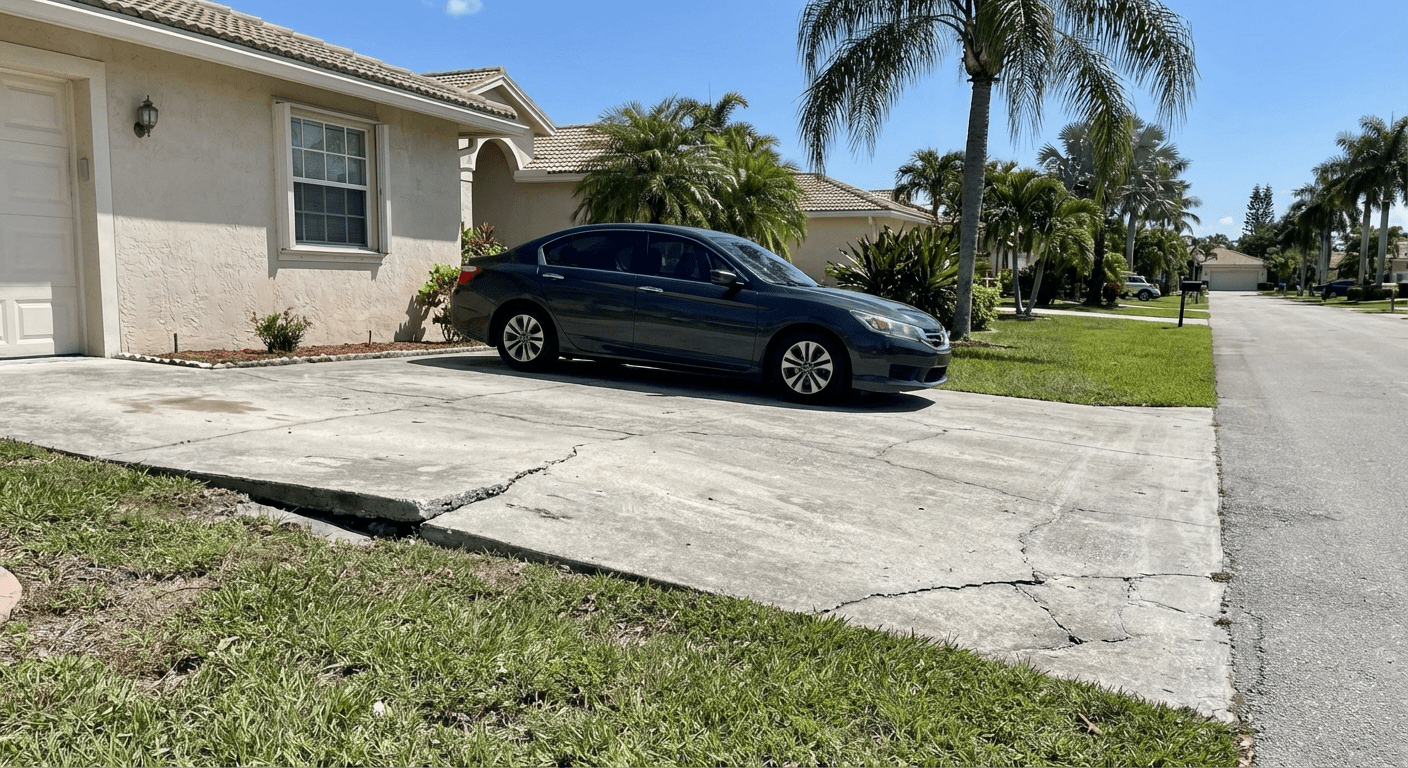
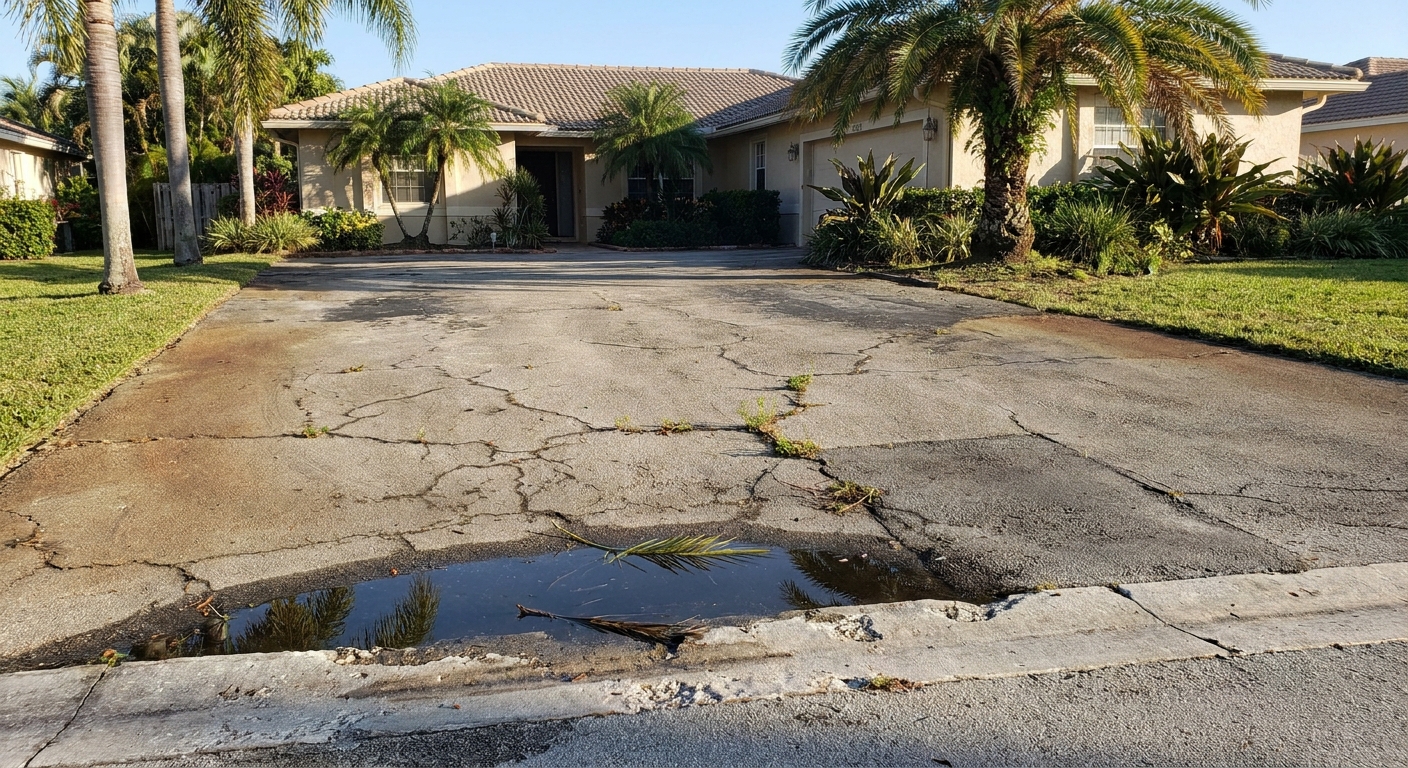
You don't need a level to spot a sinking driveway. The signs are obvious once you know what to look for. Cracks that run across sections, gaps between the driveway and garage floor, water that pools in the same spot every time it rains — these aren't cosmetic issues. They're symptoms of movement underneath.
If you're having trouble opening your car door because the driveway's no longer flush with the garage, that's a red flag. If guests trip on the uneven transition between slabs, that's another. And if you're seeing separation between the driveway and your home's foundation, you're looking at a problem that's already affecting more than just the pavement.
- Visible cracks that widen over time
- Sections sitting lower than adjacent slabs
- Standing water that doesn't drain properly
- Gaps forming between the driveway and garage or walkway
- Uneven surfaces that create tripping hazards
The Damage Doesn't Stop at the Driveway
A sunken driveway isn't just an eyesore. It's a liability. Water that pools on the surface doesn't just sit there — it finds its way into cracks, under the slab, and eventually toward your foundation. That's how you end up with basement leaks, foundation cracks, and landscaping erosion that costs thousands to repair.
Then there's the safety factor. Uneven concrete is a lawsuit waiting to happen. Someone trips, falls, gets hurt — and suddenly you're dealing with medical bills and insurance claims. Even if no one gets injured, the visual impact alone can tank your property value. Buyers see a sinking driveway and assume the rest of the property has been neglected too.
- Foundation stress from shifting weight and poor drainage
- Water intrusion into basements or crawl spaces
- Increased risk of trips, falls, and injuries
- Lower curb appeal and reduced home value
- Potential damage to garage doors or adjacent structures
Fixing It Without Tearing Everything Out
Replacement isn't always necessary. In fact, most sinking driveways can be lifted and stabilized without ripping out the entire slab. Slabjacking pumps a cement mixture under the concrete to fill voids and raise it back to level. It's fast, it's affordable, and it works for driveways that are structurally sound but just sitting too low.
Polyurethane foam injection is another option — lighter, faster-curing, and just as effective. The foam expands to fill gaps and lift the slab, and because it's waterproof, it won't wash away like traditional fill material. For severe cases where the concrete is too cracked or damaged, replacement might be the only call. But even then, you're only replacing the affected sections, not the whole driveway.
- Slabjacking uses cement slurry to lift and level sunken slabs
- Polyurethane foam injection is lightweight and cures quickly
- Partial replacement targets only the damaged sections
- Drainage improvements prevent future erosion and settling
- Root barriers stop tree roots from causing future displacement
Stop It Before It Starts Again
Once the driveway's fixed, the work isn't over. You need to address what caused the sinking in the first place. That means improving drainage, redirecting water away from the slab, and making sure the soil underneath stays stable. Install gutters, extend downspouts, regrade the landscape if needed. These aren't optional upgrades — they're maintenance.
If trees are nearby, consider root barriers or even removal if the roots are aggressive. Avoid parking heavy equipment in the same spot repeatedly. And inspect the driveway regularly for new cracks or settling. Catching problems early means smaller repairs and lower costs. Ignoring them means starting over. Understanding how weather affects concrete curing can also help you maintain your driveway's integrity over time.
When DIY Isn't Enough
Minor surface cracks can be patched. Small gaps can be filled. But if your driveway's sinking, you're dealing with a structural issue that requires professional equipment and expertise. Local contractors in Palm Beach County understand the soil conditions, the weather patterns, and the best methods for long-term stability. They'll assess the damage, recommend the right fix, and get it done without guesswork.
Don't wait until the problem spreads to your foundation or creates a safety hazard. A sinking driveway only gets worse, and the longer you wait, the more expensive the fix becomes. Get it inspected, get it repaired, and get it done right the first time. For professional concrete driveway services, you can rely on experienced contractors who specialize in trip hazard repairs and concrete grinding to restore your driveway's safety and appearance. Learn more about protecting your concrete driveway from Florida's sun and explore keeping concrete looking good year-round to ensure long-term durability.
Let’s Get Your Driveway Back on Solid Ground
We know how frustrating it is to watch your driveway sink and worry about what it means for your home. Let’s put an end to the stress and restore your property’s safety and curb appeal together. If you’re ready for a lasting solution, give us a call at 561-436-5977 or request a quote and let’s get your driveway looking and performing its best again.
‹ Back
Recent Posts
-
How Much Does a New Concrete Driveway in Palm Beach County Cost?
September 15, 2026
-
Can Concrete Grinding Make Walkways in Palm Beach County Safer?
September 1, 2026
-

-
-
Why Does Concrete in Palm Beach County Become Uneven?
July 21, 2026