


Can Concrete Grinding Make Walkways in Palm Beach County Safer?
Most property managers see a cracked sidewalk and think it's just cosmetic. A little rough around the edges, maybe an eyesore. But the lawyers see something else — and so does anyone who trips over a raised slab at dusk. Uneven concrete isn't just ugly. It's a liability waiting to happen. And in Palm Beach County, where humidity, root growth, and heavy foot traffic gang up on every surface, those hazards multiply fast.
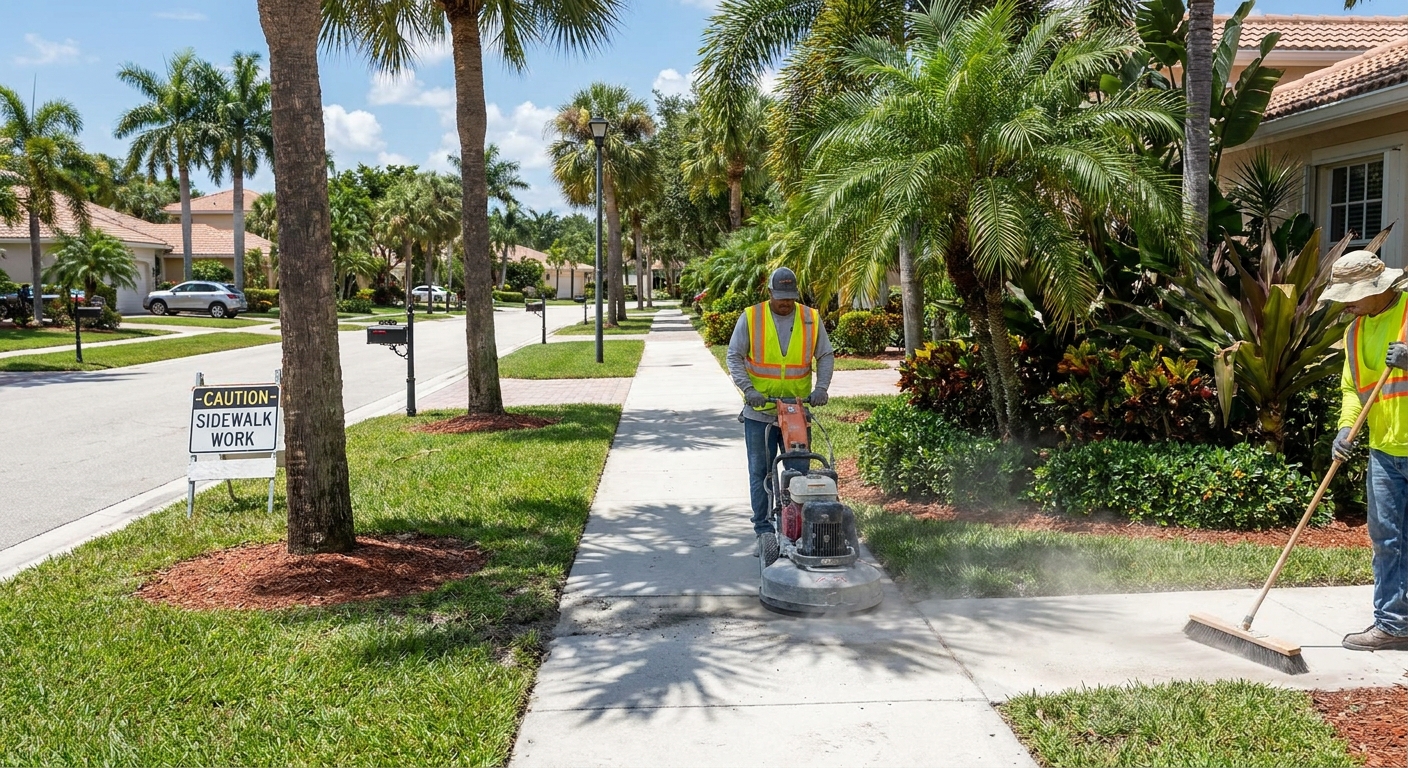
Here's the reality. If your walkways have lips, cracks, or sections that jut up like speed bumps, you're not just risking a fall. You're risking a lawsuit, an injury claim, or worse. Concrete grinding offers a fix that's faster and cheaper than replacement — but only if you understand what it does, when it works, and how to back it up with real maintenance.
What Grinding Actually Does
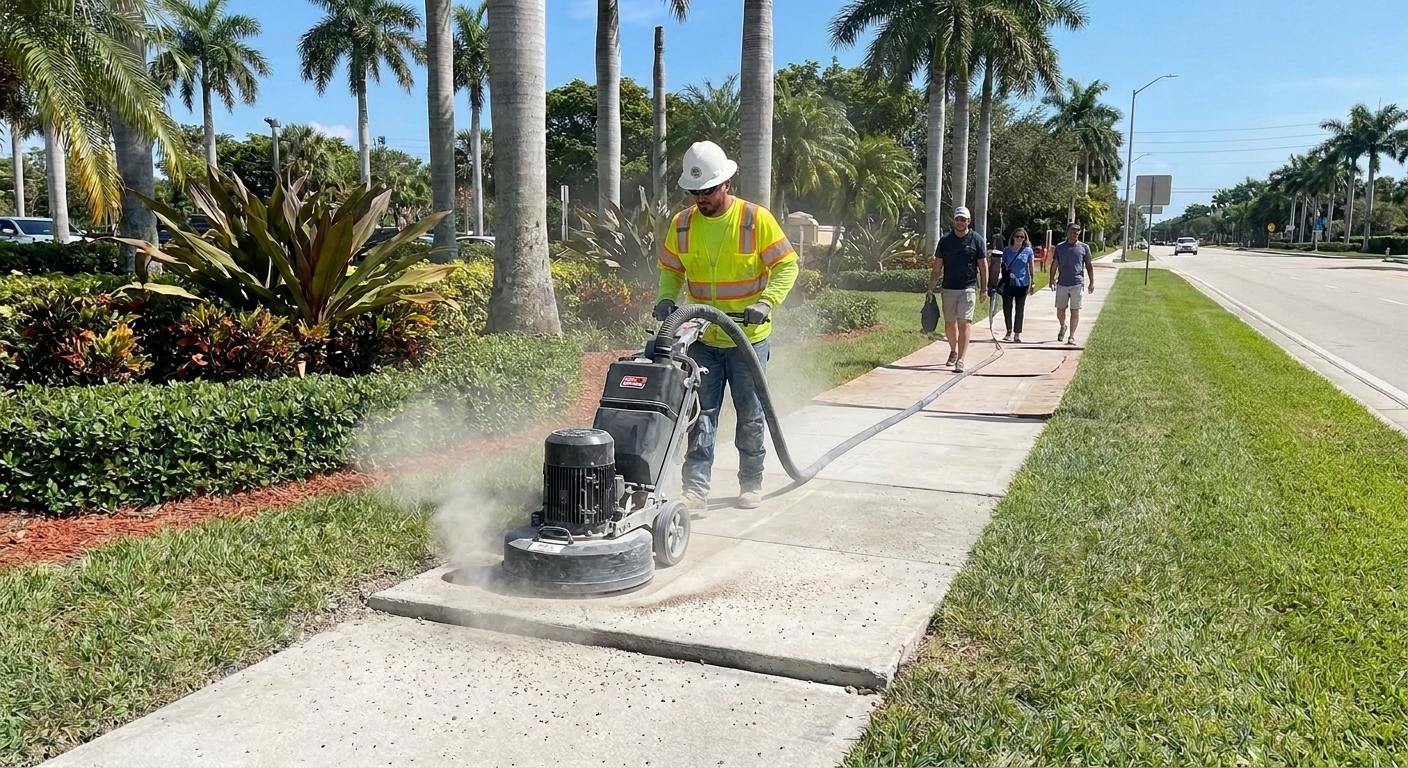
Grinding isn't magic. It's precision surface work. Contractors use diamond-tipped equipment to shave down the high spots on concrete, creating a level plane where there used to be a tripping edge. The process doesn't involve pouring new material or tearing anything out. It's corrective, not reconstructive.
The result is a smooth, flush surface that eliminates the height differential between slabs. That's the difference between a safe path and a broken ankle. And because the work happens on-site with minimal demolition, it's done in hours, not days. No hauling. No curing time. Just a clean walkway that's back in service before lunch.
The Hazards Palm Beach County Deals With
This isn't Wisconsin. The weather here doesn't freeze and thaw — it soaks and shifts. Rain saturates the ground, roots push up from below, and concrete settles unevenly. Add in the salt air near the coast and the constant UV exposure, and you've got a recipe for surface degradation.
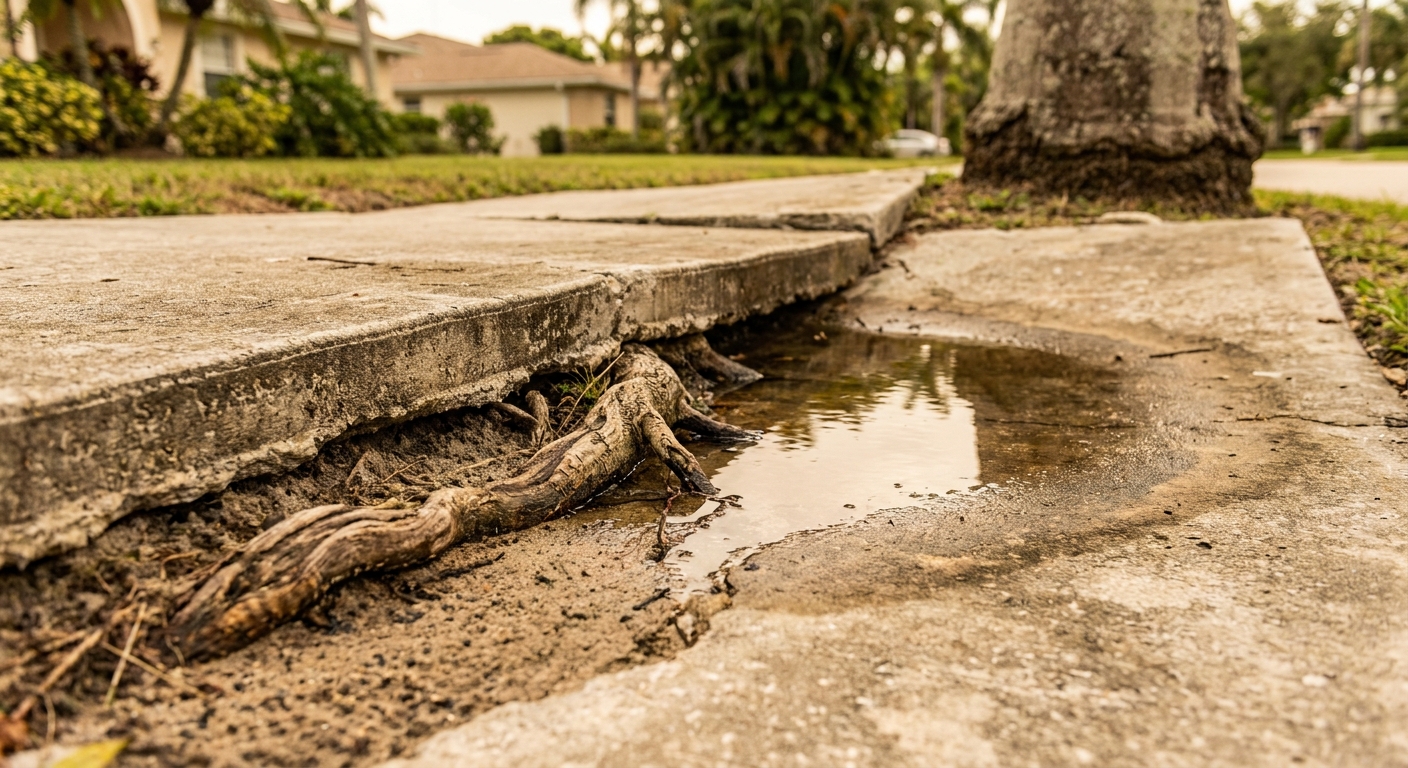
Tree roots are the biggest offender. A single oak or ficus can lift a slab two inches in a season, creating a perfect trip point. Storm runoff washes out the base material beneath walkways, leaving voids that cause settling. And high-traffic areas — near schools, parks, shopping centers — wear down faster than residential paths. Every crack you ignore today becomes a wider problem tomorrow.
Why Grinding Beats Replacement
Replacement sounds definitive. Rip it out, pour fresh concrete, problem solved. But it's expensive, disruptive, and slow. You're looking at days of downtime, heavy equipment, curing periods, and often a price tag that makes budget planners wince.
Grinding gives you most of the safety benefit at a fraction of the cost. You're not waiting weeks for concrete to set. You're not rerouting foot traffic for days on end. And you're not generating tons of waste that needs hauling and disposal. The existing slab stays in place — you're just correcting the geometry. For municipalities and property owners in Palm Beach County, that means fewer complaints, lower costs, and faster turnaround.
- Trip hazards vanish when height differences between slabs drop to zero
- Surface irregularities get smoothed before they widen into full cracks
- Drainage improves when slopes are corrected and low spots eliminated
- ADA compliance becomes achievable without ripping up entire sections
- Liability exposure drops the moment the uneven surface is gone
The Environmental and Budget Case
Concrete production is carbon-heavy. Every yard you pour has an environmental footprint. Grinding sidesteps that by preserving what's already there. You're not sourcing new aggregate, burning fuel to mix and transport material, or filling a landfill with broken slabs.
Economically, the math is straightforward. Grinding costs a fraction of what replacement runs. Most jobs finish in a single day. There's no mobilization fee for heavy trucks, no waiting on permits for major excavation. And because the surface is back in use almost immediately, you're not losing revenue or access. For commercial properties, that means no lost customers. For HOAs, it means no angry residents blocked from their morning walk.
Picking the Right Crew
Not every contractor with a grinder knows what they're doing. The equipment matters — diamond tooling, dust containment systems, precise depth control. But so does experience. A good crew assesses the entire walkway before they start, identifies underlying issues like voids or drainage problems, and addresses those first.
You want contractors who understand local codes, especially ADA slope requirements and municipal safety standards. You also want proof of insurance and references from similar jobs. A botched grinding job can make things worse — uneven depth, exposed aggregate, or a surface that wears unevenly. The difference between a safe fix and a costly do-over is who's holding the machine.
- Verify the contractor carries liability coverage specific to concrete work
- Ask for documentation of past walkway projects in similar settings
- Confirm they use dust suppression to keep the site and surroundings clean
- Check that they'll inspect for subsurface voids or drainage issues first
- Get a written scope outlining depth, area, and expected finish quality
Maintenance Keeps the Fix Working
Grinding solves the immediate hazard. It doesn't stop roots from growing or rain from washing out base material. That's why smart property managers treat grinding as part of a larger maintenance plan, not a one-and-done miracle.
Inspect walkways twice a year, especially after hurricane season or heavy storms. Look for new settling, cracks forming, or areas where water pools. Address those early — before they become trip hazards again. Seal cracks as they appear. Trim roots near walkway edges. Keep drainage clear. These aren't glamorous tasks, but they're the difference between a safe path and a repeat problem.
- Schedule inspections in spring and fall to catch issues before they worsen
- Mark any new height differences exceeding a quarter inch for grinding
- Apply sealant to cracks before water infiltrates and widens them
- Monitor tree growth and root activity near high-traffic areas
- Document all repairs and inspections for liability protection
When Grinding Isn't Enough
Grinding works best when the concrete itself is still sound. If the slab is crumbling, severely cracked, or missing chunks, grinding won't save it. You're just smoothing a surface that's already failing. In those cases, replacement or partial reconstruction is the only real fix.
Same goes for situations where the base has completely washed out or settled. Grinding the top won't stabilize the bottom. A competent contractor will tell you upfront when grinding isn't viable. If they promise to fix everything with a grinder, they're either inexperienced or dishonest.
- Spalling or flaking concrete signals deeper structural failure
- Wide cracks or separations indicate the slab has lost integrity
- Severe settling suggests base material has eroded or compacted unevenly
- Repeated grinding in the same spot means the underlying problem was never addressed
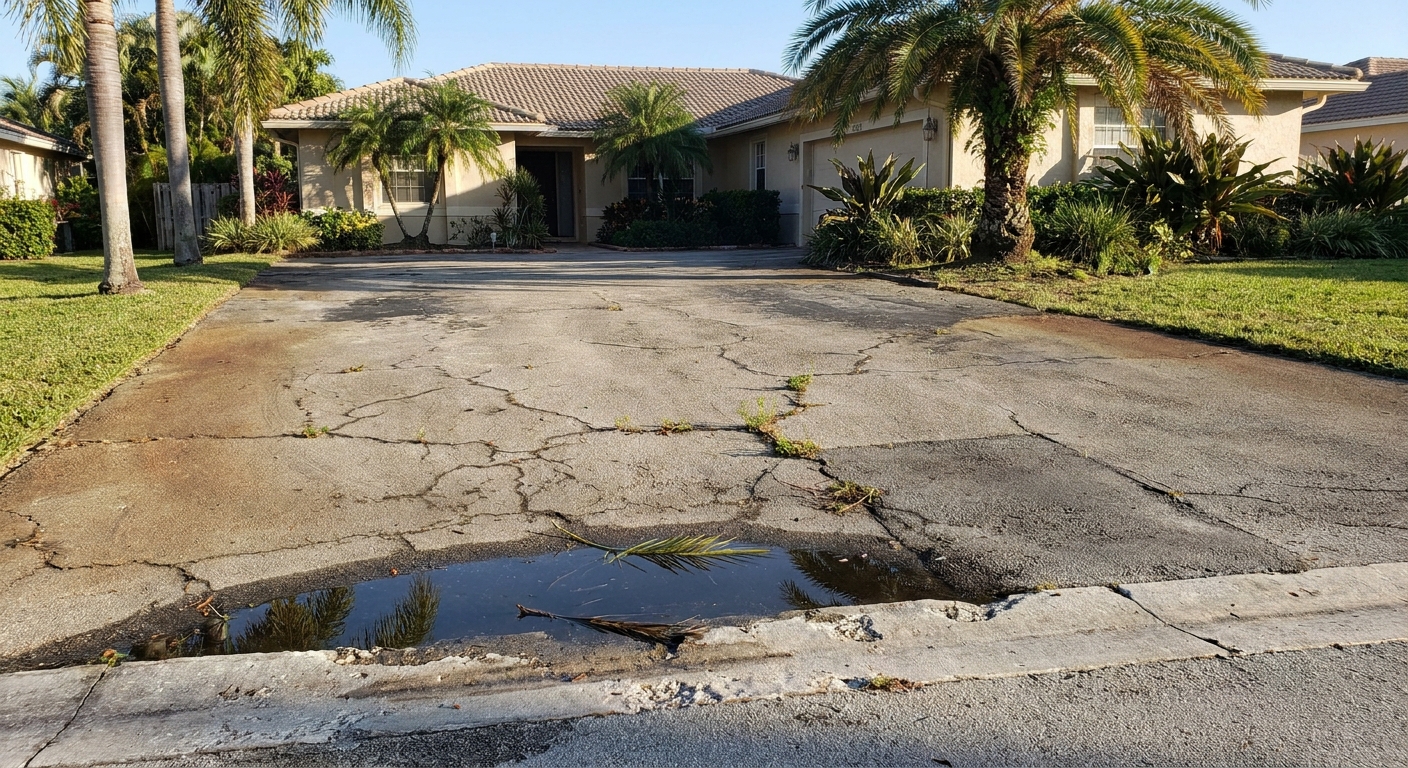
- Standing water after rain points to drainage issues grinding can't solve
Documentation Protects You
If someone trips on your property, the first question a lawyer asks is what you did to prevent it. If the answer is "nothing," you're in trouble. If the answer is "we ground the walkways, sealed the cracks, and have inspection records," you're in a much stronger position.
Keep records of every repair, every inspection, every contractor invoice. Take before-and-after photos. Document complaints and how you responded. This isn't paranoia — it's due diligence. And in Palm Beach County, where slip-and-fall claims are common, it's the difference between a defensible position and a settlement check.
- Photograph walkways before and immediately after grinding work
- Store contractor invoices and detailed scopes of work
- Log all inspection dates and findings in a central file
- Track any complaints or incident reports related to walkway conditions
- Share documentation with your insurance carrier to show proactive risk management
Safety Starts With Action
Grinding doesn't replace vigilance. It's a tool, not a cure-all. But when used correctly — by skilled contractors, as part of a maintenance plan, backed by documentation — it delivers measurable safety improvements at a cost that makes sense. In Palm Beach County, where walkways take a beating from weather, roots, and traffic, that's a combination worth acting on. Understanding the benefits of concrete grinding and keeping concrete maintained year-round helps preserve both safety and property value. The alternative is waiting for the fall, the claim, or the headline. And by then, it's too late to grind anything but your teeth.
Let’s Make Your Walkways Safer—Together
We know how important it is to keep your property safe and accessible for everyone who sets foot on it. If you’re ready to address those uneven walkways and reduce your liability, let’s talk about how we can help. Give us a call at 561-436-5977 to discuss your project, or request a quote and we’ll get you the answers you need to move forward with confidence.
‹ Back
Recent Posts
-
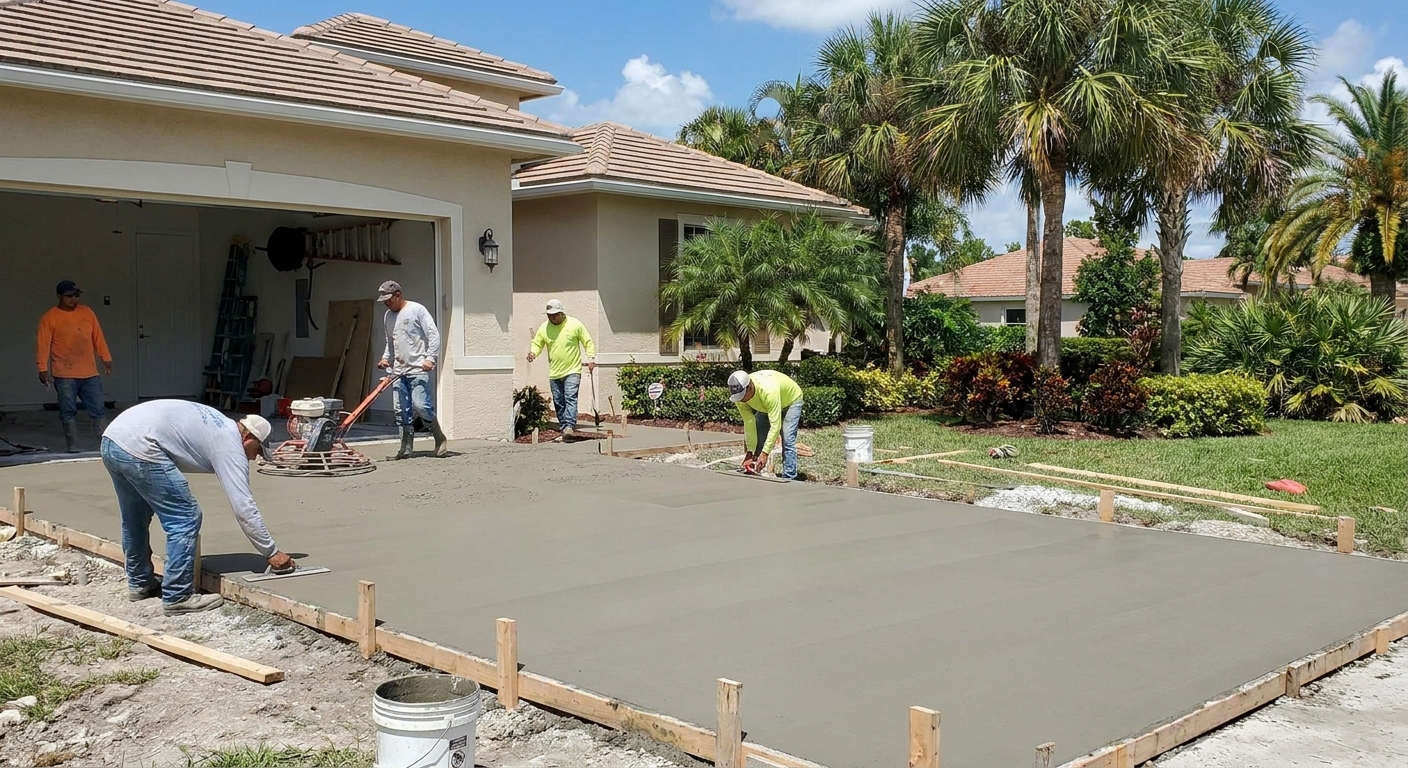
How Much Does a New Concrete Driveway in Palm Beach County Cost?
September 15, 2026
-
Can Concrete Grinding Make Walkways in Palm Beach County Safer?
September 1, 2026
-
-
-
Why Does Concrete in Palm Beach County Become Uneven?
July 21, 2026