


Are Tree Roots in Palm Beach County Damaging Your Concrete Walkways?
Palm Beach County landscapes don't just grow—they explode. That lush canopy overhead? It's doing work underground too, and not always in your favor. Tree roots are built to search, stretch, and push. When your walkway sits in their way, it's not a fair fight. Concrete might feel solid, but it's no match for a root system that's thirsty and determined.
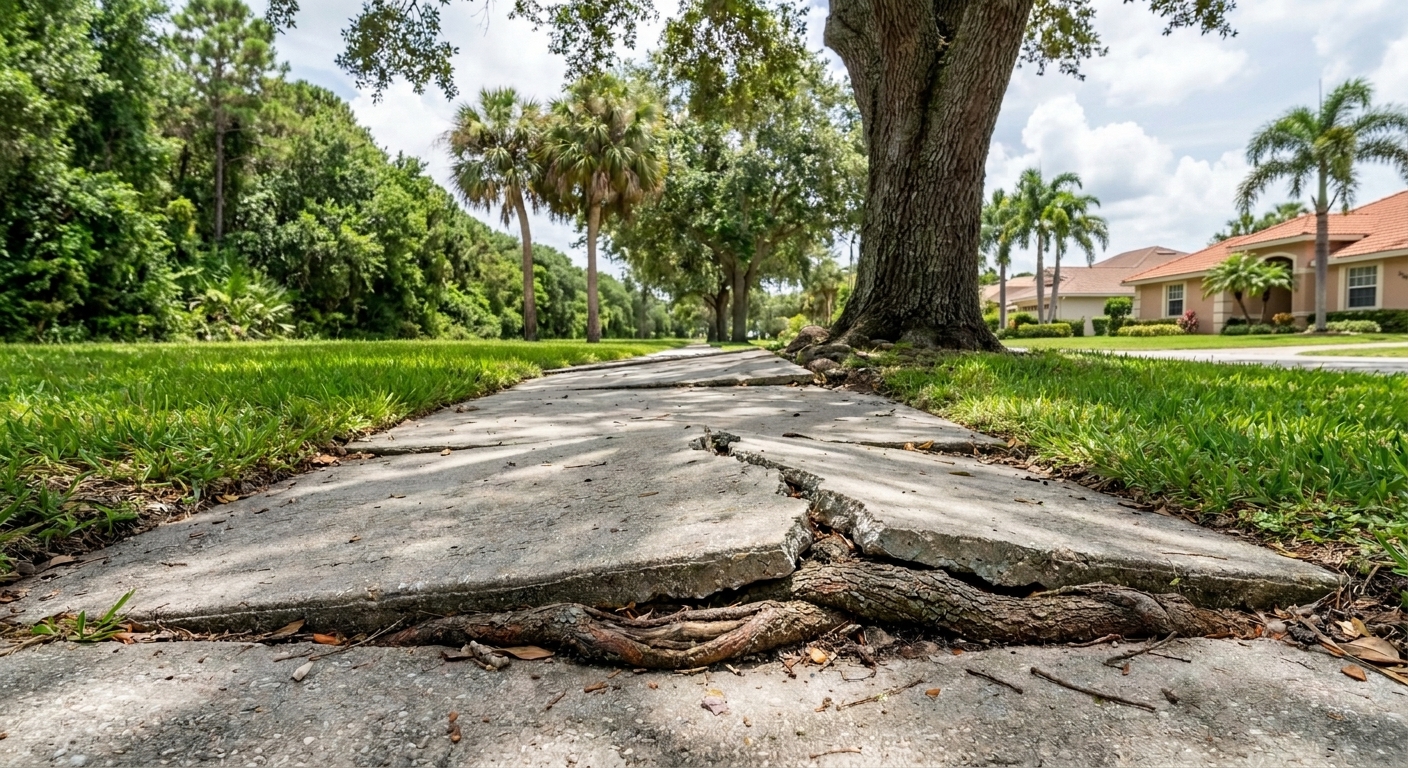
Most property owners love their trees. Shade, curb appeal, property value—it all checks out. But those same roots can turn a smooth walkway into a tripping hazard faster than you'd think. And once the damage starts, it doesn't stop on its own. You either deal with it head-on or watch it get worse. There's no middle ground when physics and biology team up against your hardscape.
Roots Don't Care About Your Concrete
Trees pull moisture from wherever they can find it. Roots fan out far past the drip line, sometimes double or triple the width of what you see above ground. In a climate like ours—warm year-round, rain that shows up in sheets—growth doesn't slow down. Roots chase water, nutrients, and space. If your walkway happens to be sitting on top of their path, they'll push right through.
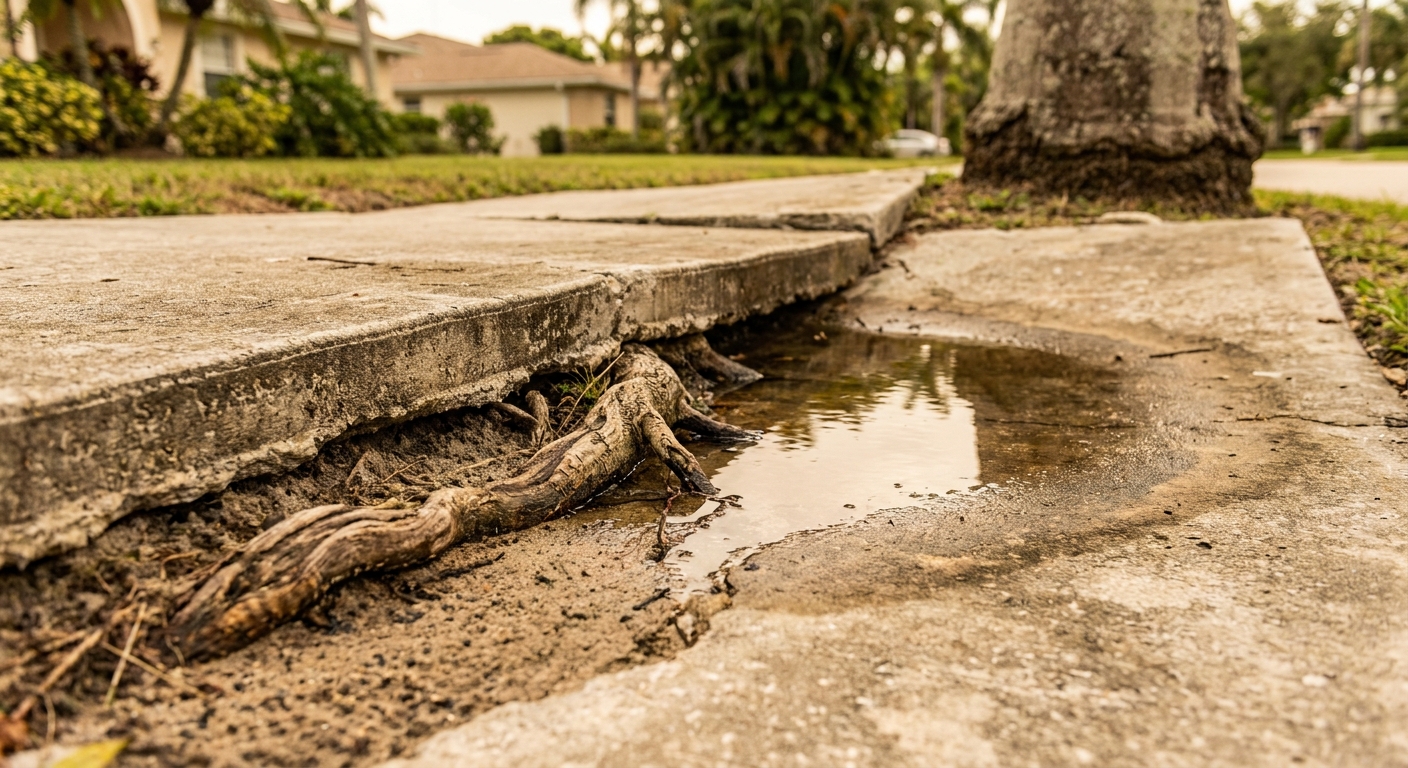
We see it all the time. A slab that looked perfect five years ago now has a crack running down the middle. Or one side's lifted just enough to catch your toe. That's not wear and tear. That's biology doing what it does, and concrete losing the standoff. The pressure builds slowly, but the damage compounds fast once it gets going.
What You'll See When Roots Take Over
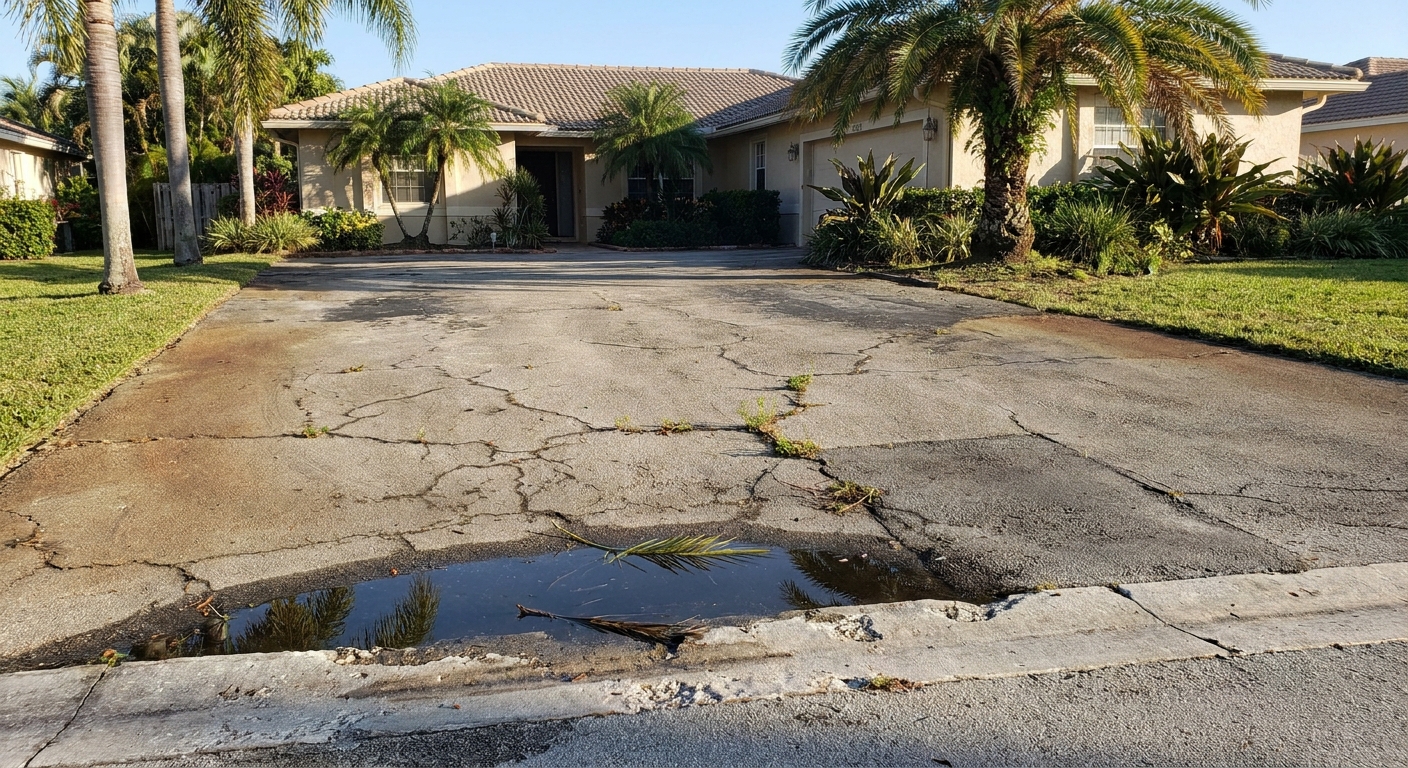
- Hairline fractures that widen into full splits over time
- Sections of concrete that tilt or rise at odd angles
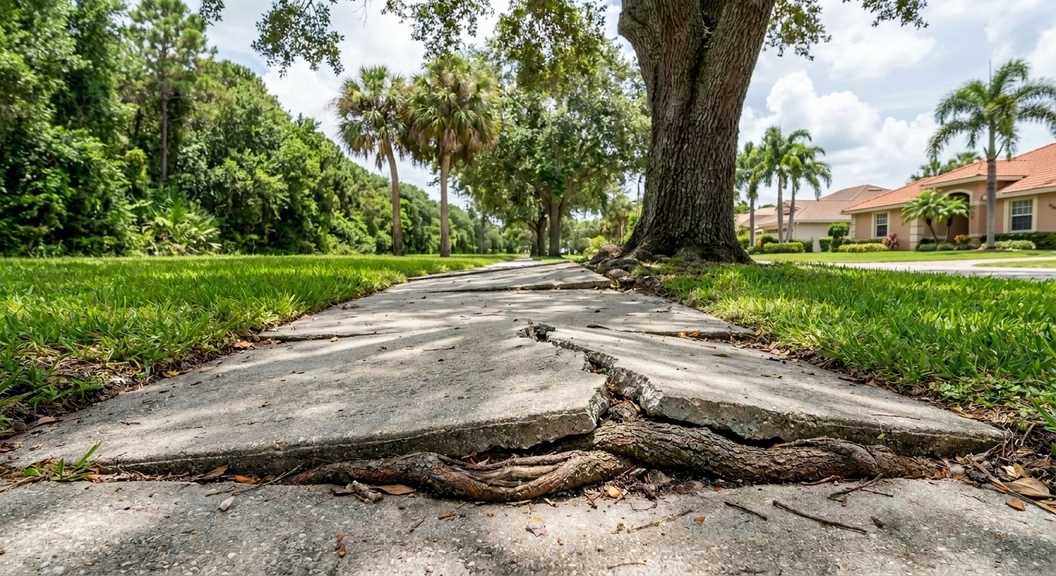
- Exposed root tops breaking through the surface layer
- Water collecting in sunken spots after rain
- Edges that crumble or flake where pressure built up
Why Palm Beach County Gets Hit Harder
Our soil doesn't push back. It's sandy, loose, and easy for roots to navigate. That means they spread faster and farther than they would in clay or compacted ground. Add in the fact that most of our neighborhoods were laid out decades ago—before anyone thought about root zones or setback standards—and you've got a recipe for conflict.
Live oaks, ficus, mahoganies, even some palms—they all come with root systems that don't quit. Plenty of homes have walkways installed within a few feet of the trunk. Great for shade. Terrible for longevity. By the time the tree matures, the roots are already underneath, lifting from below like a slow-motion earthquake.
Stop the Problem Before It Starts
We can't rewind the clock on trees that are already planted. But if you're building new or replanting after a storm, this is your shot to get it right. Placement matters more than people think. So does species selection. Not every tree is a liability, but some are worse offenders than others.
Here's what actually works when you're trying to keep roots and concrete from going to war down the line.
- Pick trees with compact or less aggressive root structures for areas near hardscape
- Leave enough distance between the trunk and any slab—at minimum, match the mature canopy width
- Install root barriers made from durable materials that redirect growth downward instead of outward
- Schedule regular inspections to catch encroachment early before it turns into a full repair job
- Work with a landscape designer who understands both horticulture and hardscape limits
Fixing What's Already Broken
Once the damage is done, ignoring it won't make it go away. Cracks spread. Uneven surfaces get worse. And the longer you wait, the more expensive the fix becomes. The good news? There are options that don't require ripping out every tree on your property.
Minor lifting can be handled with concrete grinding or leveling—quick, effective, and relatively affordable. More serious damage might mean replacing a section or two. That's also your chance to install barriers or adjust the layout so history doesn't repeat itself. In cases where the tree is too valuable to risk, root pruning can buy you time—but only if it's done right. Cut too much, and you destabilize the whole tree. Cut too little, and the problem comes right back.
- Surface grinding smooths out small rises and eliminates trip hazards without full replacement
- Slab removal and reinstallation gives you a clean slate and room to add protective barriers
- Strategic root pruning can slow growth without killing the tree, but timing and technique matter
- Switching to pavers or flexible materials accommodates future movement without cracking
- Mudjacking or foam lifting can raise sunken sections back to level in less invasive repairs
When DIY Turns Into a Gamble
Cutting roots sounds simple until you realize how much you can damage a tree by guessing. Remove the wrong section, and you've compromised stability. Miss the real problem area, and you've wasted time and money. Same goes for concrete work—improper repairs crack faster than the original pour.
Bring in a certified arborist if you're dealing with mature trees. Bring in a concrete pro if the walkway's toast. Ideally, bring in both and let them coordinate. That way, you're not sacrificing one asset to save the other. You're solving the whole problem with a plan that actually holds up.
Protect What You've Built
Roots and concrete don't have to be enemies, but they do need space and smart planning. Most of the damage we see could've been avoided with better placement or a barrier installed at the right time. The rest comes down to catching problems early and fixing them before they snowball.
Palm Beach County properties are built to look good and last. But if you're not watching what's happening underground, you're setting yourself up for expensive surprises. Understanding trip hazards commonly found in Palm Beach County walkways can help you identify issues before they worsen. Keep an eye on your walkways, especially around your driveways, patios, and pool decks. Know where your roots are headed. And when something shifts, don't wait for it to crack wide open before you act.
Let’s Keep Your Walkways Safe and Strong
We all want our Palm Beach County properties to look their best and stay safe for everyone who visits. If you’ve noticed cracks, uneven spots, or suspect tree roots are making trouble beneath your concrete, let’s tackle it together before it gets worse. Give us a call at 561-436-5977 or request a quote today so we can help you protect your investment and restore peace of mind.
‹ Back
Recent Posts
-
How Much Does a New Concrete Driveway in Palm Beach County Cost?
September 15, 2026
-
Can Concrete Grinding Make Walkways in Palm Beach County Safer?
September 1, 2026
-

-
-
Why Does Concrete in Palm Beach County Become Uneven?
July 21, 2026